

♥ Wishlist
Compare 54 verified Badminton Equipment & Accessories products in India. Reviews, ratings, pros, cons and buying advice updated for October 2026.


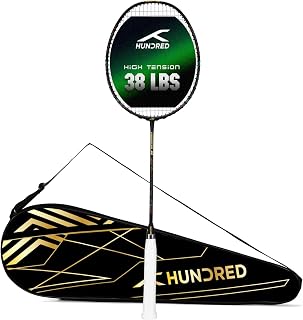


Badminton equipment is becoming increasingly specialised in 2026, with players in India paying closer attention to racket balance, shaft response, string selection, court shoes, shuttlecock type, grip design and equipment durability rather than choosing products on appearance alone. The biggest change is not simply the arrival of new products; it is the growing emphasis on matching equipment to playing style, ability level, court conditions and frequency of use.
This guide examines the latest badminton trends relevant to Indian buyers and explains how to evaluate the equipment categories that matter most. It is designed as an independent buying resource for players comparing rackets, strings, shoes, shuttlecocks, grips, bags and other badminton accessories.
Current manufacturer catalogues also show how broad the modern badminton equipment range has become. Yonex's 2026 badminton catalogue, for example, spans rackets, footwear, strings, shuttlecocks, bags and related equipment, while its current racket range includes the ASTROX, ARCSABER and NANOFLARE families.
One of the most important badminton buying trends in 2026 is the shift from simply asking for the “best badminton racket” to identifying the racket characteristics that suit a particular player. A beginner who needs easy handling may have very different requirements from an experienced singles player looking for a demanding head-heavy racket.
Modern racket families commonly separate products by characteristics such as balance, shaft stiffness, frame design, weight class and intended playing style. Yonex currently categorises its badminton rackets into families including ASTROX, ARCSABER and NANOFLARE, illustrating the importance of selecting a design according to the player's priorities rather than choosing solely by brand name.
A head-heavy racket places comparatively more mass toward the racket head. This can appeal to players who prioritise powerful attacking shots, smashes and rear-court play. The trade-off is that the racket can feel slower during rapid changes of direction, especially for players who lack sufficient technique or strength.
Even-balance models are often considered versatile because the weight distribution does not strongly favour either the head or handle. They can be useful for recreational and intermediate players who alternate between attacking and defensive situations.
Head-light rackets generally emphasise manoeuvrability. They can be attractive for doubles players, front-court specialists and players who frequently perform quick drives, blocks and defensive transitions.
A stiffer shaft can provide a more direct response for a player with sufficiently fast and consistent swing mechanics. A more flexible shaft can help some developing players generate useful shuttle acceleration without requiring the same level of timing and swing speed.
There is no universally superior shaft stiffness. A specification that benefits an advanced player may feel unnecessarily demanding to a beginner.
Weight is one of the specifications that should be examined carefully when comparing modern badminton rackets. A lighter racket can feel quicker during defensive reactions and fast exchanges, but lower static weight does not automatically mean a racket will suit every player.
Buyers should consider the complete combination of racket weight, balance point, swing feel, shaft response and grip size. Two rackets with similar listed weights can feel noticeably different because their mass is distributed differently.
A racket's listed weight is normally only one part of its handling characteristics. Balance and overall construction influence how the racket moves through the swing. This is why comparing only a number such as 4U or 3U can lead to an incomplete buying decision.
Modern badminton rackets increasingly use frame shapes and construction approaches intended to influence air movement and swing behaviour. Aerodynamic design is particularly relevant because badminton involves repeated acceleration and deceleration rather than a single slow swing.
However, “more aerodynamic” should not automatically be interpreted as “better.” Frame design involves trade-offs between speed, stability, strength, feel and the intended performance characteristics of the racket.
When comparing models, look beyond marketing terminology and examine the complete specification. A racket that swings quickly but does not provide the response you need may be less useful than a slightly slower model that matches your technique.
String selection can significantly change the playing character of a badminton racket. The same frame can feel different depending on string type, gauge, tension, stringing quality and the player's preferred response.
Current badminton ranges include strings positioned around different priorities such as quick repulsion, control and durability. Yonex, for example, currently separates its string catalogue into performance categories including quick repulsion and control/durability-related choices.
Higher string tension can provide a firmer response and precise feedback for players capable of consistently striking the shuttle in the intended area of the string bed. Lower tension can offer a more forgiving feel and may be easier for developing players.
Increasing tension simply because advanced players use it is a common mistake. String tension should be selected according to technique, comfort, racket specifications and personal preference.
Thin badminton strings can provide a lively response and sharp feel, but durability can become a more important consideration, particularly for frequent players, hard hitters or players who regularly clash rackets.
Thicker strings generally place greater emphasis on durability. They can make sense for recreational players who prioritise longevity and predictable performance over maximum responsiveness.
Racket selection receives most of the attention from buyers, but court footwear can be equally important for movement. Badminton involves lunges, side-to-side movement, rapid stops, jumps and repeated changes in direction.
A running shoe is designed for forward movement and should not automatically be treated as a substitute for a badminton court shoe. Court footwear should be assessed for grip, lateral stability, cushioning, fit and compatibility with the playing surface.
Current badminton footwear ranges demonstrate the breadth of this category. Yonex's current badminton shoe listings include models such as the POWER CUSHION AERUS Z, POWER CUSHION ECLIPSION Z and POWER CUSHION 65 Z, showing how manufacturers segment footwear around different performance requirements.
Shuttlecock selection has a direct effect on the playing experience and ongoing cost of badminton. Feather shuttlecocks generally provide a different flight and feel from synthetic alternatives, while nylon or other synthetic options can be attractive for recreational sessions where durability and cost control are important.
Current badminton shuttlecock catalogues include both feather and nylon categories. Yonex's current range, for example, separates its shuttlecocks into Feather and Nylon sections.
Feather shuttles can be preferable when players want a traditional tournament-style flight and feel. They are commonly associated with more demanding competitive play, although their suitability depends on the level of play, court environment and budget.
Synthetic shuttlecocks can be practical for casual games, coaching sessions, beginners and players who want to reduce shuttle replacement frequency. They can also make sense where the cost of regular feather replacement would be excessive.
The grip is the connection between the player and racket, yet it is often one of the least carefully considered components of a badminton setup. A grip that is too large can make rapid changes difficult, while an excessively small grip may encourage unwanted movement or excessive gripping pressure.
Players in India's warmer and more humid environments should also consider sweat management. Overgrips can be replaced more frequently than the original grip and allow players to fine-tune thickness and surface feel.
Dedicated badminton bags are increasingly designed around the practical needs of players carrying multiple rackets, footwear, clothing, shuttlecocks and accessories. For players who commute to courts, compartment layout can be more valuable than appearance.
Current badminton bag ranges include dedicated racket bags, tournament bags, backpacks and compact options. Yonex's current catalogue, for example, includes Pro, Expert, Compact and Club categories.
Technology is increasingly influencing how recreational and competitive players practise. Video recording, slow-motion analysis, digital coaching resources and performance-tracking tools can help players identify technical patterns that are difficult to notice during ordinary games.
Technology should be treated as a training aid rather than a substitute for sound coaching. A sensor or application can collect information, but the value comes from interpreting that information and turning it into a practical training adjustment.
One of the strongest buying lessons for 2026 is that the most expensive badminton product is not necessarily the best choice for a particular player. A premium racket can be unsuitable if its stiffness, balance or weight does not match the player's ability.
Similarly, an expensive shoe is not automatically superior if its fit is wrong. A high-end string may not be economical for someone who breaks strings frequently. A premium feather shuttle may be unnecessary for casual games.
The better approach is to identify the feature that solves the actual problem and spend accordingly.
Start with your playing level and style. Then compare weight, balance, shaft flexibility, frame design, grip size, recommended stringing range and intended use.
Beginners generally benefit from manageable handling, a forgiving response and sensible durability. There is little value in choosing an extremely demanding professional-level racket before developing consistent technique.
Intermediate players can begin narrowing their choice around singles versus doubles, attack versus defence and preferred racket response. At this stage, balance point and shaft characteristics become more meaningful than brand recognition alone.
Advanced players can make more precise decisions about racket weight, balance, shaft stiffness, string model and tension. They may also have established preferences based on technique and competition requirements.
Singles generally involves greater court coverage and extended rallies, while doubles often contains faster exchanges and more frequent defensive reactions. Equipment preferences therefore can differ significantly between disciplines.
Carbon-based construction has become standard across many performance badminton rackets. The important buying question is not simply whether a racket contains carbon material, but how the complete construction affects weight, stiffness, durability and feel.
Yonex describes its Indian manufacturing operation as producing badminton rackets with attention to carbon material selection, construction and quality control, while noting that its Indian facility manufactures mainly entry-level racket models.
Buyers should therefore avoid treating phrases such as “high modulus carbon” or similar construction terminology as automatic proof of superior performance. Material terminology matters, but the player's interaction with the finished racket matters more.
Professional equipment can be useful for understanding what performance characteristics elite players use, but copying a professional setup does not guarantee better results for a recreational player.
For example, Yonex's report on the 2026 India Open lists different combinations of rackets, strings and shoes used by individual players, including combinations involving ASTROX, NANOFLARE and ARCSABER rackets.
The important lesson is that even elite players do not necessarily use one universal setup. Their equipment is matched to playing style, technique and personal preference.
Counterfeit sporting equipment can be difficult to distinguish from genuine products when listings use professional photographs and familiar brand names. A suspiciously attractive deal should therefore be assessed carefully rather than accepted solely because it appears inexpensive.
| Specification | Why It Matters | What to Consider |
|---|---|---|
| Weight class | Influences handling and overall swing feel | Choose a manageable weight for your ability and playing style |
| Balance | Changes how the racket feels during acceleration | Compare head-heavy, even-balance and head-light options |
| Shaft flexibility | Influences timing and response | Match flexibility to swing speed and technique |
| String tension | Changes feel, feedback and forgiveness | Stay within the manufacturer's specified range |
| Grip size | Affects control and manoeuvrability | Consider hand size and overgrip thickness |
| Frame design | Influences swing characteristics and stability | Look beyond marketing terminology |
| Material construction | Contributes to weight, stiffness and durability | Assess the complete racket rather than one material claim |
| Feature | Why It Matters |
|---|---|
| Non-marking court outsole | Suitable traction is important for indoor court movement |
| Lateral stability | Helps support side-to-side movement and changes of direction |
| Cushioning | Contributes to comfort during repeated impact |
| Heel security | Reduces unwanted foot movement inside the shoe |
| Breathability | Useful for long sessions and warm conditions |
| Fit | A secure, comfortable fit is fundamental to movement |
| Weight | Can influence how quickly the shoe feels during movement |
Professional players have highly developed technique and may use specifications that are unnecessarily demanding for recreational players.
Higher tension is not automatically better. It can produce a firmer response while reducing forgiveness and potentially increasing the demands placed on technique and equipment.
Running shoes are designed primarily around forward running movement. Badminton requires substantial lateral movement, making court-specific footwear a more appropriate choice.
An unsuitable grip can affect racket control and comfort. Grip size should be considered before finalising a racket purchase.
A lower purchase price can become less economical if the product wears quickly or does not suit the player's requirements. Total value should include durability, replacement needs and suitability.
Design can be a valid preference, but it should come after the technical characteristics that influence actual play.
There is no single correct budget for every Indian badminton player. The appropriate spending level depends on how frequently you play, your current ability, the cost of court sessions and how important performance is to you.
Beginners should generally prioritise a dependable racket, suitable shoes and comfortable grip over collecting multiple specialised accessories. Regular intermediate players may benefit from spending more selectively on strings, footwear and racket characteristics. Competitive players may justify premium equipment when its specifications genuinely match their established playing style.
Before buying, compare the complete cost of ownership rather than the initial product price. A setup involving frequent string replacement, shuttle replacement and footwear replacement can cost considerably more over time than the initial racket purchase.
Store the racket in a suitable protective bag and avoid leaving it exposed to unnecessary heat, moisture or rough handling. Inspect the frame periodically for visible damage, especially after racket clashes.
Inspect the string bed regularly. If strings show significant wear, fraying or breakage, have them replaced by an appropriately skilled stringer. Avoid exceeding the manufacturer's recommended tension range.
Allow badminton shoes to dry naturally after use and avoid storing them while heavily damp. Keep the outsole free from dust and debris because court traction can be affected by contamination.
Replace worn or slippery grips rather than continuing to play with poor traction. Players who sweat heavily may need to replace overgrips more frequently.
Store shuttlecocks according to the manufacturer's recommendations and protect them from unnecessary heat and moisture. Feather shuttle performance can be particularly sensitive to storage conditions.
| Player Type | Priorities | What to Avoid |
|---|---|---|
| Beginner | Easy handling, comfort, durability and reasonable cost | Extremely demanding stiff or expensive setups |
| Recreational | Reliability, comfort and low running costs | Overspending on features that will not be used |
| Intermediate | Balance, shaft response, string choice and footwear | Choosing solely by brand or professional endorsement |
| Advanced | Precise racket characteristics, string setup, footwear and consistency | Changing equipment constantly without identifying the reason |
| Competitive | Repeatable setup, durability and discipline-specific performance | Ignoring competition requirements and equipment compliance |
Players participating in organised competition should distinguish between ordinary recreational equipment and equipment intended for regulated competition. The Badminton World Federation's Laws of Badminton specify requirements concerning racket construction, the stringed area and equipment compliance.
For serious tournament players, it is sensible to check the applicable competition regulations rather than assuming that every commercially available accessory or modification is permitted in every setting.
India's varied climate means badminton players may experience very different equipment conditions depending on where and when they play. Heat, humidity, dust, ventilation and indoor court conditions can all influence comfort and maintenance.
Breathable footwear and clothing can improve comfort during long sessions. Sweat-resistant grip strategies may also become more important.
Dust can reduce traction. Keeping badminton shoe outsoles clean is therefore an important maintenance habit.
Temperature and humidity may be more controlled, but players should still allow damp clothing and footwear to dry before storing them.
Shuttle behaviour can vary with playing environment. Players using feather shuttlecocks should select the appropriate speed according to the playing conditions and the manufacturer's guidance rather than assuming that one speed works everywhere.
When researching badminton equipment, buyers may encounter established brands such as Yonex, Li-Ning, Victor, Babolat, Ashaway, Carlton, Apacs and other specialist or value-focused manufacturers. Brand reputation can be useful, but it should not replace model-level comparison.
Yonex remains particularly prominent across badminton rackets, strings, shuttlecocks, footwear and bags, while Li-Ning maintains a substantial international badminton presence.
The most useful comparison is therefore not “which brand is best?” but “which specific model and specification best matches the player's needs?”
Customer reviews can provide useful information, but they should be interpreted carefully. A review from a beginner may describe a product differently from a review by an advanced tournament player.
When comparing online deals, check the exact model number rather than relying on product titles. Different versions of a racket can look similar while having different specifications. Similarly, badminton shoes may have men's, women's, wide, slim or junior versions with different fits.
Before ordering, compare the listed specifications, seller information, customer feedback, applicable return conditions and the product's compatibility with your requirements. Also check the current price because online prices and promotions can change.
The best badminton product is not necessarily the newest, most expensive or most heavily marketed option. A better definition is a product that delivers the characteristics the player actually needs while remaining comfortable, durable and appropriate for the intended level of play.
For one player, the best racket may be a fast and lightweight model. Another player may benefit from a heavier attacking racket. One player may prioritise durable strings, while another may prefer a highly responsive string bed. A frequent tournament player may need a large equipment bag, whereas a casual player may only need a compact backpack.
The most noticeable trends include more specialised racket designs, lightweight and aerodynamic frames, greater attention to string selection, performance-oriented court shoes, improved equipment organisation and technology-assisted training. The emphasis is increasingly on matching equipment to the player's individual requirements.
There is no single best racket for every Indian player. The right choice depends on playing level, singles or doubles preference, balance, weight, shaft stiffness, swing speed, budget and desired playing characteristics.
Yonex remains one of the major badminton equipment brands, with an extensive current range of rackets, strings, shoes, shuttlecocks and bags. However, buyers should compare individual models rather than assuming every Yonex product is automatically the best choice for their needs.
Li-Ning is an established international sports brand with a dedicated badminton presence. Its products can be considered alongside Yonex, Victor and other specialist brands when comparing specifications, fit, price and playing characteristics.
Usually, the priority should be a racket that is easy to handle, comfortable and appropriate for the player's ability. A premium racket is worthwhile only when its characteristics provide a meaningful benefit for the individual player.
Both matter, but they affect different aspects of play. The racket influences stroke response and handling, while shoes influence movement, grip, stability and comfort. Players should not neglect footwear simply because rackets receive more attention.
Choose according to playing style. Head-heavy models can suit players prioritising attacking power, while head-light models can appeal to players who value quick handling. Even-balance models can provide a versatile middle ground.
Not necessarily. Higher tension can provide a firmer and more precise response but may be less forgiving. Tension should match the player's technique and remain within the manufacturer's specified limits.
Neither is universally better. Feather shuttles can provide a more traditional flight and feel, while synthetic shuttles can be practical for recreational play and situations where durability and cost are priorities.
There is no universal replacement interval. Replace the grip when it becomes slippery, excessively worn, compressed or uncomfortable. Players who sweat heavily may need to replace grips more often.
Dedicated badminton or indoor court shoes are generally the better choice because badminton requires frequent lateral movement, sudden stops and changes of direction that are different from ordinary running.
Compare the exact model and specifications with the manufacturer's information, purchase from reputable sellers, inspect packaging and product details, and be cautious of unusually low prices or inconsistent specifications.
Replacement depends on playing frequency, string type, tension, hitting style and accidental racket clashes. Inspect the strings regularly and replace them when they break or show significant wear.
Consider racket capacity, shoe storage, ventilation, clothing compartments, accessory pockets, carrying comfort and whether the bag suits your normal travel routine.
Not always. Professional-oriented rackets can have demanding weight, balance or shaft characteristics. Beginners should prioritise manageable handling and technique development rather than copying an elite player's equipment setup.
The latest badminton trends are ultimately moving toward more specialised equipment and more informed buying decisions. Instead of choosing products simply because they are new, highly rated or associated with a famous player, compare the characteristics that directly affect your own game.
For a racket, start with weight, balance, shaft response and grip. For strings, consider tension, durability and feel. For shoes, prioritise fit, court grip and lateral stability. For shuttlecocks, consider flight, durability, playing level and ongoing cost. For bags and accessories, focus on the way you actually travel to and from the court.
Brands such as Yonex and Li-Ning offer extensive badminton ranges, while other established manufacturers provide additional alternatives. The strongest purchase decision comes from comparing exact models, checking current specifications, reading relevant verified customer feedback and selecting equipment that fits your playing style rather than chasing specifications for their own sake.
Because product ranges, specifications, retailer pricing and availability can change during 2026, check the latest manufacturer information and current retailer listings before completing a purchase. This is especially important when comparing newly launched models, limited editions, different weight classes or different regional versions.