

♥ Wishlist
Compare 54 verified Travel Accessories for Comfortable and Organised Journeys products in India. Reviews, ratings, pros, cons and buying advice updated for October 2026.




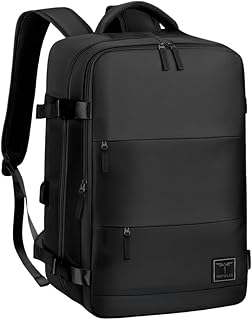





Travel accessories have moved well beyond simple luggage tags and toiletry pouches. In 2026, Indian travellers are increasingly looking for compact organisers, charging solutions, comfortable carry options, security-focused accessories, reusable travel products and space-saving gear that can work across flights, road trips, rail journeys and short weekend breaks.
The most useful travel accessory is not necessarily the newest or most expensive one. A good choice should solve a specific travel problem without adding unnecessary weight, bulk or complexity to your bag. This guide focuses on the features that matter when comparing travel accessories in India, including materials, capacity, portability, durability, compatibility, ease of cleaning and everyday practicality.
The right combination depends on the type of journey you take. Someone travelling frequently for work has different requirements from a family going on an annual holiday. A backpacker may prioritise low weight, while an international flyer may place greater importance on compatibility, security and organisation.
Before comparing individual products, identify how and where you normally travel. Domestic flights, international flights, train journeys, road trips, business travel and backpacking all place different demands on accessories.
Packing organisers are among the simplest ways to improve luggage management. Instead of placing every item directly into a suitcase, travellers can divide clothing, accessories, undergarments and other belongings into separate compartments.
When comparing packing cubes, examine the fabric, zipper construction, stitching, mesh panels, handles and dimensions. A breathable mesh section can make it easier to identify contents without opening every compartment, while reinforced seams can be useful when the organiser is packed tightly.
Compression-style organisers require particular attention to zipper quality. Compression does not mean that clothing becomes weightless; it simply changes how available space is used. Overpacking a compression cube can also put unnecessary stress on its seams and zippers.
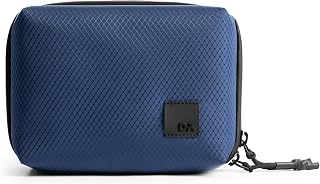
Cables and small electronics are easy to lose inside a large backpack. A dedicated tech organiser can separate USB cables, charging plugs, power banks, memory cards, earphones and other accessories.
Look for elastic loops, zipped pockets, padded sections and sufficient depth. A very thin organiser may be convenient for a few cables but unsuitable if you carry a laptop charger, multiple adapters and larger accessories.
Brands such as Amazon Basics, DailyObjects and Portronics offer products across different travel and electronics categories, but specifications should always be checked for the individual model rather than assuming every product from a brand has the same construction.
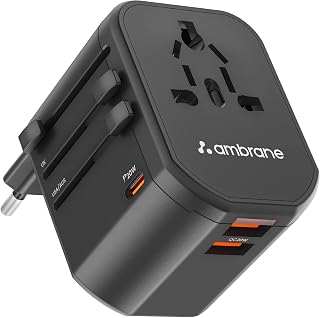
A travel adapter can be essential when travelling internationally, but buyers should distinguish between a plug adapter and a voltage converter. They are not interchangeable.
A plug adapter changes the physical plug configuration so a compatible device can connect to a foreign socket. It does not necessarily change the electrical voltage or frequency. Travellers should check the input requirements printed on their chargers and devices before connecting them to unfamiliar electrical systems.
When comparing an adapter, check:
Popular electronics brands such as Portronics, Belkin and UGREEN have products in related charging and connectivity categories. Always verify the exact model specifications before purchase.
Portable charging remains one of the most practical travel categories because phones are used for boarding passes, navigation, payments, photography, hotel reservations and communication.
Capacity is only one consideration. A higher-capacity power bank can also be heavier, so frequent flyers should balance battery capacity against portability and airline requirements.
Check the following specifications before buying:
Do not assume that a larger mAh number automatically means faster charging. Charging speed depends on output power, supported protocols and the capabilities of the connected device.
A travel pillow should support the way you actually sit rather than simply feeling soft in a shop or product photograph. Shape, height, firmness, fabric and adjustability all influence comfort.
Memory foam models can provide structured support, while inflatable designs may be easier to pack. Some travellers prefer wraparound designs that support the sides of the head, while others need a smaller cushion that can fit behind the neck.
Look for removable and washable covers when hygiene is important. A pillow that compresses significantly for storage can also be more practical than a bulky model that occupies valuable cabin-bag space.
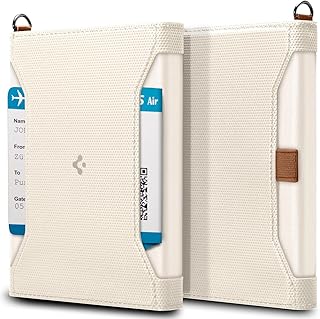
A travel wallet can consolidate a passport, cards, currency, boarding documents and other small essentials. The best format depends on how much you need to carry.
For minimalists, a slim passport holder may be sufficient. Families may benefit from larger organisers with several document compartments, although excessive capacity can make the wallet bulky.
RFID-blocking construction is sometimes marketed as a security feature. It is important to understand what the feature is designed to do rather than treating it as protection against every form of identity theft. Good travel security also includes keeping documents secure, using strong account authentication and avoiding unnecessary exposure of personal information.
A compact digital luggage scale can help travellers estimate baggage weight before arriving at the airport. This is particularly useful when return luggage is likely to be heavier because of shopping or souvenirs.
When comparing luggage scales, examine the stated maximum weighing capacity, display readability, measurement units, battery type, hook or strap design and overall weight. A compact model is easier to keep inside luggage between trips.
Remember that an inexpensive luggage scale is a checking tool, not a guarantee of the exact measurement used by an airline's airport equipment. Leave a sensible margin rather than packing right up to a stated baggage limit.
A dedicated toiletry system helps prevent grooming products from spreading throughout a suitcase. Waterproof or water-resistant materials can be particularly useful if a bottle leaks.
Look for sealed compartments, leak-resistant bottles, transparent sections and easy-clean surfaces. Silicone bottles can be convenient for liquids and gels, while rigid containers may work better for products that require greater protection.
Travellers should also check the current liquid restrictions and packing requirements of their airline and departure airport, particularly for cabin baggage.
Anti-theft bags can incorporate design elements intended to make opportunistic access more difficult. These may include hidden pockets, lockable zipper pulls, reinforced panels and cut-resistant materials.
No bag should be considered completely theft-proof. Security features are most useful when combined with sensible behaviour, especially in crowded railway stations, airports, tourist areas and public transport.
When evaluating these bags, examine whether the security feature is genuinely practical. A hidden pocket is useful only if it remains accessible enough for the owner, while a complicated locking mechanism can become inconvenient during frequent security checks.
A foldable bag can provide additional capacity without occupying the space of a full-size second bag during the outward journey. It can be useful for shopping, sightseeing, laundry separation or carrying items during a day trip.
Pay attention to the folded dimensions, unfolded capacity, handle construction, zipper quality and fabric thickness. Very lightweight fabric can reduce packed weight but may offer less abrasion resistance than heavier materials.
Nylon is widely used in travel bags and organisers because it can offer a useful balance between weight, flexibility and durability. Different nylon constructions behave differently, so the word “nylon” alone is not enough to judge a product.
Polyester is another common luggage and travel-accessory material. It can provide good everyday practicality and is available in a wide range of constructions and price points.
Polycarbonate is commonly associated with hard-shell luggage rather than small accessories. It can provide a rigid protective structure, although the overall luggage design, thickness, frame and hardware also affect durability.
ABS is often used in hard-shell luggage and cases. It can be lighter or less expensive in some constructions, but buyers should assess the complete shell and hardware design rather than selecting solely by material name.
Leather and synthetic leather are often chosen for travel wallets, passport holders and premium-looking organisers. Appearance and tactile quality may be advantages, while weight, maintenance and resistance to moisture vary considerably between products.
Silicone is particularly useful for flexible travel bottles and some compact containers because it can be soft, squeezable and relatively easy to clean. The closure mechanism remains important because the material itself does not guarantee leak resistance.
Comparing two products solely by price is rarely enough. A more useful approach is to compare the features that directly affect how you will use the product.
Manufacturers may describe products using litres, compartments or broad capacity categories. Dimensions provide a more concrete basis for comparison. Measure the available space in your suitcase or backpack and compare it with the product's external dimensions.
A travel accessory that weighs several hundred grams may seem insignificant individually, but multiple organisers, electronics accessories and comfort items can collectively add meaningful weight.
Inspect stitching, zipper tracks, pullers, buckles, handles and reinforced stress points. For electronic organisers, examine padding around sensitive devices. For toiletry bags, inspect waterproof lining and closure construction.
Compatibility claims deserve particular attention with adapters, chargers, cables and electronic accessories. Check connector types, charging protocols, voltage requirements and device compatibility instead of relying only on a product title.
Organisation is helpful until every item has its own pouch. Excessive compartmentalisation can consume space and add weight. Choose organisers according to genuine packing problems.
Customer reviews can reveal practical information, but reviews should be interpreted alongside specifications. One traveller may praise a compact organiser because it fits a small backpack, while another may dislike the same size because it cannot hold a large charger.
Product images can make an accessory look larger or smaller than it really is. Always check measurements before ordering.
These terms should not be treated as identical. A water-resistant fabric or coating may provide protection against splashes without being designed for immersion or prolonged exposure to water.
Heavy accessories can reduce the practical capacity of a lightweight travel setup. Consider the total weight of the complete system rather than each product in isolation.
A higher price can reflect materials, design, branding or additional features, but it does not automatically mean a product is the best choice for every traveller. Match specifications to your actual requirements.
Some travel accessories, particularly power banks, batteries, liquids and electronic equipment, may be subject to airline or airport restrictions. Rules can vary and may change, so travellers should verify current requirements before departure.
A practical low-cost setup can focus on the essentials: a basic organiser, compact toiletry pouch, simple luggage scale, suitable charging accessories and a foldable day bag. The priority should be functional construction rather than maximum features.
A mid-range setup can add better organisation, stronger materials, improved charging capability and more specialised storage. This is often a sensible level for travellers who take several trips each year.
Frequent travellers may justify premium products when the additional cost provides meaningful improvements in durability, ergonomics, materials, portability or warranty support. Premium branding by itself should not be the deciding factor.
Domestic travel within India can involve flights, trains, buses, taxis and long road journeys in the same itinerary. This makes versatility particularly valuable.
For train journeys and road trips, accessibility may matter more than ultra-compact packing. An organiser that opens completely can be more convenient when you need to find an item quickly.
International travel introduces additional considerations, including electrical compatibility, passport security, baggage restrictions and destination-specific requirements.
Business travel usually rewards efficiency. The best accessories are those that reduce setup time without making the carry-on unnecessarily heavy.
A professional travel kit may include a laptop sleeve, tech organiser, compact charger, cable management system, document organiser and small toiletry kit. Products from brands such as Samsonite, American Tourister, Targus, Belkin and DailyObjects may be worth comparing depending on the specific category and model.
For frequent business travel, durability can be more important than novelty. A simple organiser that survives repeated packing and unpacking can provide more value than a feature-heavy product that is rarely used.
Family travel creates a different organisation challenge because several people's belongings need to remain accessible. Colour-coded organisers or separate pouches can help distinguish personal items.
Backpackers generally benefit from a strict weight-to-usefulness approach. Every accessory should justify its place in the bag.
Compression organisers, lightweight toiletry bags, compact charging equipment, quick-drying personal-care items and multipurpose pouches can be useful. Avoid buying multiple products that perform essentially the same task.
For longer trips, easy cleaning and repairability can also become more important than appearance. A product that can be wiped clean and continues functioning after repeated use may be more valuable than one selected primarily for its design.
A minimalist kit starts with the problems you repeatedly encounter rather than a list of products marketed as travel essentials.
Specifications can be more informative than promotional descriptions. Look for measurable information such as dimensions, weight, material, capacity, connector type, output wattage and supported compatibility.
For bags and organisers, dimensions should be considered alongside internal layout. For electronic accessories, output and protocol compatibility are usually more meaningful than vague claims about fast charging. For bottles and containers, capacity and closure design matter more than appearance.
Customer ratings can help identify recurring issues, but they should not replace product specifications. A useful review often describes how the product was used and what happened over time.
When reading verified customer reviews, look for recurring comments about:
Give greater weight to patterns across many relevant reviews than to a single unusually positive or negative comment.
Empty pockets completely after returning home. Remove receipts, food wrappers, dust and other debris before storing the accessory.
Charging accessories and electronic organisers should be stored away from moisture. Allow damp bags or cases to dry completely before closing and storing them.
Forcing a zipper around an overfilled pouch can place excessive stress on the teeth, stitching and slider. If the organiser is difficult to close, reduce the contents rather than repeatedly forcing it.
Portable batteries and other rechargeable electronics should be stored according to the manufacturer's instructions. Avoid leaving damaged or swollen batteries in regular travel storage.
A quick pre-trip inspection can identify broken zippers, damaged cables, leaking bottles or depleted batteries before they become problems during a journey.
Spend more selectively on accessories that receive frequent use or that protect more expensive belongings. A durable tech organiser may be worth prioritising for a frequent business traveller, while an occasional holidaymaker may reasonably choose a simpler option.
For safety-related electronics such as chargers and power banks, reliable specifications and appropriate protections should take priority over cosmetic features. For inexpensive organisational products, functionality and fit may matter more than premium materials.
There is no universal best travel accessory because travel requirements differ. The best product for one person may be unnecessarily large, heavy or feature-rich for another.
A strong buying decision usually balances five factors: functionality, compatibility, durability, portability and value. Customer feedback can add useful real-world context, while manufacturer specifications help confirm whether the product actually matches your requirements.
The most useful choices depend on the journey, but packing organisers, tech organisers, suitable charging accessories, toiletry bags, luggage scales and compact day bags are broadly practical. International travellers may also need a suitable plug adapter and additional document organisation.
Focus on accessories that improve organisation without taking up unnecessary cabin space. A compact tech pouch, document organiser, toiletry kit, charging accessories and a lightweight personal bag can cover many common needs.
They can be useful for separating clothing and improving suitcase organisation. Compression versions can also change how clothing occupies available space, but they do not reduce the actual weight of the packed clothing.
No. A travel adapter changes the physical plug configuration. A voltage converter is designed to change electrical voltage. Travellers should check the requirements of their destination and devices before choosing either product.
It is an optional security feature rather than a universal travel requirement. It can be considered by travellers who prefer an additional layer of protection against certain RFID-based scanning scenarios, but sensible document and account security remain important.
There is no single best material. Nylon and polyester are common choices because they can provide a practical balance of weight and durability, while other materials may be preferable for specific uses. Examine construction quality, stitching and closures alongside the fabric.
They can be worthwhile when the additional cost provides a meaningful improvement in durability, comfort, organisation or compatibility. Price alone should not determine the choice.
List the problems you regularly encounter during travel and select accessories that solve those problems. Avoid carrying separate products that perform essentially the same function.
Consider size, compartments, waterproof or water-resistant construction, closure quality, ease of cleaning and whether bottles can remain upright or secured during transport.
A luggage scale can be useful if you regularly check baggage or return from trips with additional purchases. It provides a convenient way to estimate your luggage weight before leaving for the airport.
Depending on the category, travellers can compare established brands such as Samsonite, American Tourister, Targus, Belkin, UGREEN, Portronics, DailyObjects and Amazon Basics. Brand reputation should be treated as a starting point rather than a substitute for checking the specifications of the exact product.
The latest travel accessory trends are ultimately about making travel simpler, not filling your suitcase with more equipment. The strongest choices are products that solve a recurring problem, fit naturally into your existing luggage and remain useful across multiple types of journeys.
Before purchasing, compare dimensions, weight, materials, construction, compatibility and current customer feedback. For electronics, pay particular attention to charging specifications and applicable travel restrictions. For bags and organisers, focus on fit, accessibility and durability. For comfort products, consider how much space they consume compared with how often you will use them.
Whether you are preparing for a domestic holiday, an international trip from India, a business journey, a family vacation or a backpacking adventure, a carefully selected travel-accessory kit can improve organisation and convenience without unnecessary bulk. The goal is not to own every trending travel product in 2026; it is to choose the few accessories that genuinely make your own journeys easier.