

♥ Wishlist
Compare 42 verified Luggage for Every Journey: Choose the Right Travel Companion products in India. Reviews, ratings, pros, cons and buying advice updated for October 2026.
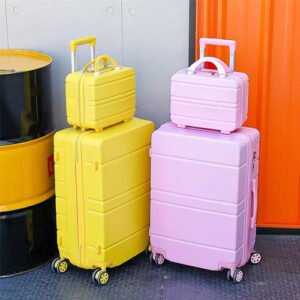




Luggage is no longer chosen only by size and appearance. In 2026, Indian travellers are increasingly looking at the complete travel experience: weight, wheel performance, internal organisation, durability, security features, portability, and how easily a suitcase fits into airline baggage limits. The latest luggage trends therefore combine practical travel features with cleaner designs, versatile storage, and materials suited to different types of journeys.
This buying guide is designed for shoppers comparing luggage in India across cabin, medium and large suitcase categories. Instead of treating one style as universally best, the right choice depends on how frequently you travel, whether you usually fly or travel by train and road, how much you pack, and how important low weight and organisation are to you.
Brands such as Samsonite, American Tourister, VIP, Safari, Skybags, Mokobara and Nasher Miles offer different approaches to luggage design and travel functionality. Before choosing a specific model, compare the actual specifications, dimensions, empty weight, wheel configuration, materials, compartments and available security features rather than relying on appearance alone.
Lightweight hard-shell luggage remains one of the most useful developments for frequent air travellers. A lighter suitcase gives you more practical packing capacity within a fixed airline baggage allowance. This is particularly relevant when travelling with checked baggage because the suitcase itself contributes to the total weight.
Common hard-shell materials include polypropylene, polycarbonate and ABS. They should not be treated as interchangeable. Polypropylene can offer a useful combination of low weight and impact resistance, while polycarbonate is widely valued for its balance of toughness and flexibility. ABS can be an economical option, but buyers should pay attention to the construction and intended use rather than choosing solely by material name.
Expandable luggage is particularly practical for Indian travellers who may return with additional clothing, souvenirs or purchases. An expansion zip can provide extra internal volume when required while allowing the suitcase to remain more compact during the outbound journey.
Expansion is useful, but it should not automatically be used on every trip. A suitcase that becomes substantially deeper when expanded may occupy more space in an aircraft cabin, vehicle boot or hotel room. More importantly, expansion does not increase the permitted airline weight allowance.
Four-wheel spinner luggage has become a popular choice because it can be moved in multiple directions with relatively little effort on smooth surfaces. This makes it convenient in airports, railway stations, hotel corridors and shopping areas.
The important distinction is not simply the number of wheels. Wheel housing, wheel size, rotation, alignment and overall construction affect how comfortable the case is to manoeuvre. Small wheels can work well on polished airport flooring but may be less comfortable on uneven pavements, damaged roads or rough railway platforms.
Wheel durability is often overlooked when comparing luggage. A suitcase may have an attractive shell and excellent internal organisation, but damaged wheels can make the entire product difficult to use.
Double-wheel configurations can provide additional contact points and may improve stability. Reinforced wheel housings can also be valuable for travellers who frequently check luggage. However, the design should be evaluated as part of the entire suitcase rather than assuming that a particular wheel arrangement guarantees durability.
For frequent travellers, pay particular attention to wheel construction, attachment points and whether replacement parts or service support are realistically available for the model in question.
Modern luggage is increasingly designed around organisation rather than simply providing one large empty compartment. Compression panels, zipped dividers, mesh sections, garment areas and smaller accessory pockets can make packing more efficient.
Internal organisation is especially useful when travelling with electronics, toiletries, formal clothing or several categories of garments. However, every internal panel also consumes some space and can add weight. Minimalists may prefer a simple open compartment, while business travellers and organised packers may benefit from multiple sections.
Security remains an important consideration for luggage used on domestic and international journeys. Many modern suitcases include combination locks or other integrated locking systems. Some designs are marketed with TSA-compatible locking features for international travel.
A luggage lock is not a substitute for sensible travel precautions. Travellers should understand how the lock operates, keep the combination secure and avoid placing valuables in checked luggage. The presence of a lock should therefore be considered one part of the luggage's overall design rather than a guarantee against loss or theft.
Cabin luggage continues to be one of the most important categories for short trips, business travel and travellers who prefer to avoid checked baggage. The key issue is that cabin baggage restrictions are determined by the airline, not by the luggage manufacturer's description of a suitcase as "cabin size".
Dimensions, weight allowances and permitted baggage policies can differ between airlines and fare types. Measurements may also include wheels and handles, so buyers should compare the complete external dimensions.
Before purchasing a cabin suitcase, check:
Minimalist luggage designs are prominent because many travellers want a suitcase that looks polished without excessive branding or decorative details. Matte finishes, understated colours, clean lines and integrated handles can create a more refined appearance.
Appearance should still be evaluated alongside practicality. Glossy surfaces can show scratches and marks more visibly, while textured or matte finishes may disguise everyday wear more effectively. Dark colours can be practical for hiding dirt, whereas lighter or distinctive colours can make a suitcase easier to identify on a baggage carousel.
Business travel has encouraged luggage designs that combine clothing storage with dedicated spaces for laptops, documents and smaller accessories. A business-oriented suitcase can reduce the need to carry a separate work bag on shorter journeys, although the additional compartments may increase the empty weight.
When choosing luggage for work travel, consider laptop compatibility carefully. A compartment that is described generally as a laptop section should not be assumed to fit every laptop size. Measure your device and compare it with the manufacturer's stated compartment dimensions where available.
Another practical luggage trend is the move toward more distinctive colours, patterns and finishes. A recognisable suitcase is easier to identify among similar black bags at an airport baggage carousel or railway station.
You do not need an unusual colour to achieve this. A luggage tag, contrasting strap or identifiable pattern can also help. If choosing a coloured suitcase, consider whether the finish will show scratches, scuffs or dirt easily.
Suitcase size should be selected according to trip duration, packing style and transportation method rather than simply choosing the largest case available.
Cabin luggage is generally suited to short trips, business journeys and travellers who pack efficiently. Its biggest advantage is convenience because you can keep your belongings with you rather than checking a suitcase.
However, cabin size is not a universal measurement. Always verify the current baggage dimensions and weight rules of the airline you intend to use.
Medium luggage can be a versatile option for longer personal trips when a cabin bag is insufficient but an oversized suitcase would be unnecessary. It can provide a useful balance between packing capacity and manoeuvrability.
Large suitcases are appropriate when you need considerable packing capacity, particularly for extended travel or multiple travellers sharing baggage. The trade-off is greater empty weight, greater physical size and potentially more difficulty when moving through crowded spaces.
Extra-large luggage should be purchased carefully. More capacity can become a disadvantage if the suitcase is difficult to lift, exceeds airline limits or becomes awkward to transport. A very large case can also encourage overpacking.
Polycarbonate is widely used for hard-shell luggage and is valued for its combination of impact resistance and relatively manageable weight. It can be a strong option for travellers who frequently fly, although the quality of the overall construction remains more important than the material name alone.
Polypropylene can provide a useful balance of flexibility and weight. It is commonly used in lightweight suitcase construction and can suit travellers who prioritise manageable luggage weight.
ABS is frequently found in more affordable hard-shell luggage. It can be suitable for occasional travel, but buyers should examine the overall construction, shell quality, wheel system and hardware rather than assuming all ABS luggage performs identically.
Soft luggage commonly uses synthetic fabrics such as polyester. Fabric density, stitching, zipper construction, reinforcement and frame design can all affect long-term practicality. A fabric suitcase with useful external pockets can be particularly convenient for road trips and business travel.
Online shopping makes it easy to compare many suitcase designs, but photographs can hide important differences. A systematic specification check can prevent many disappointing purchases.
Customer ratings can be useful, but a single overall rating does not tell you whether a suitcase is suitable for your travel pattern. Look for recurring comments about specific components and separate genuine long-term observations from complaints that may relate to incorrect expectations.
If multiple verified buyers independently mention wheel problems, zipper failures, handle looseness or shell damage, the pattern deserves attention. One isolated complaint is less informative than a recurring issue across many reviews.
A review of a cabin suitcase does not necessarily apply to a large checked suitcase from the same product family. Construction can vary between sizes, so compare reviews and specifications for the exact variant you intend to purchase.
A suitcase may receive negative feedback because a traveller expected it to survive conditions for which it was not designed. Similarly, complaints about cabin compatibility can sometimes arise because airline restrictions were not checked. Reviews are most useful when the reviewer explains how and where the luggage was used.
Frequent flyers should prioritise functional components that are repeatedly used rather than selecting a suitcase primarily for its appearance.
Airport-focused suitcase design is not always ideal for railway travel. Indian railway stations can involve stairs, platform gaps, crowded walkways, uneven surfaces and longer periods of carrying or pulling luggage.
For train journeys, consider a suitcase with robust wheels, a comfortable side handle, a secure top handle and construction that is manageable when lifted. Four-wheel spinners are convenient on smooth floors, but a traveller who frequently encounters rough surfaces may value larger or more robust wheels and easy lifting points.
Road travel creates a different set of requirements. Suitcases are often loaded into car boots, moved over parking areas and stacked alongside other bags. A flexible soft-sided case can sometimes be convenient when boot space is irregular, while a structured hard-shell suitcase can offer easier stacking and organisation.
For road trips, consider external handles, compact dimensions, practical pockets and whether the luggage fits your vehicle's available storage area.
Business travellers generally benefit from a combination of compact dimensions, easy organisation and professional appearance. A cabin suitcase with a dedicated laptop compartment can be particularly useful for short trips, provided the compartment dimensions match the device being carried.
Consider how quickly you need to access documents, chargers, headphones, toiletries and clothing. A suitcase that looks minimal externally can still be highly functional if its internal layout is designed well.
Families should think beyond maximum capacity. Several medium cases can sometimes be easier to distribute, lift and organise than one oversized suitcase. Separate luggage can also allow each traveller to manage their own belongings.
For family trips, useful features include durable wheels, strong handles, easy identification, expandable storage and internal compression. If children will handle their own bags, weight and manoeuvrability become especially important.
There is no single price point that guarantees the best suitcase. A suitable budget depends on travel frequency, baggage requirements and which features actually matter to you.
Occasional travellers may prioritise sensible construction and value, while frequent travellers may benefit from spending more on features they use repeatedly, such as lighter construction, stronger wheel systems, better organisation or easier serviceability.
Rather than choosing based solely on the highest price, compare:
A stylish suitcase may look excellent in photographs but still be unsuitable if it is heavy, difficult to manoeuvre or poorly organised. Design should complement functionality rather than replace it.
Two suitcases can have similar external dimensions but significantly different empty weights. This difference becomes important when airlines impose strict baggage limits.
One of the most common mistakes is assuming that a suitcase marketed as cabin luggage will automatically meet every airline's requirements. Always verify the current airline policy before travelling.
Maximum capacity is not always an advantage. Oversized luggage can become difficult to lift, manoeuvre and keep within baggage limits.
These are among the most frequently handled components of a suitcase. A buyer who concentrates only on shell material can overlook the parts that most directly affect everyday usability.
For luggage intended for frequent use, check the manufacturer's warranty conditions and service arrangements before purchase. Coverage, exclusions and service availability can differ by brand and product.
Brand reputation can be a useful starting point, but it should not replace model-level comparison. Samsonite is widely associated with premium travel luggage, while American Tourister offers a broad range of travel-oriented designs. VIP, Safari and Skybags are established names in the Indian luggage market, while brands such as Mokobara and Nasher Miles appeal to shoppers looking for contemporary designs and feature combinations.
The best brand for one traveller may not be the best for another. Compare the individual model's dimensions, weight, material, wheels, compartments, lock, warranty and intended use.
When two products appear similar, use a specification-first comparison rather than choosing based on photographs or ratings alone.
Good luggage can still feel inconvenient when packed inefficiently. Start by separating essentials, clothing, footwear, toiletries and electronics before placing everything into the case.
Wipe hard-shell luggage with a suitable soft cloth and follow the manufacturer's cleaning instructions. For fabric luggage, check the care guidance before applying cleaning products because some materials and finishes can be damaged by unsuitable chemicals.
Remove visible dirt and debris from wheel areas where appropriate. If a wheel begins to wobble, stick or make unusual noises, investigate the issue rather than continuing to use the suitcase until the component fails completely.
Expansion features should not be treated as permission to force an overloaded suitcase closed. Excessive pressure on zippers and seams can reduce the usable life of the luggage.
After a journey, empty the suitcase completely and allow damp items or the interior to dry before storage. Store it in a clean, dry location and avoid unnecessary pressure on the shell or frame.
A luggage set can be attractive for families or travellers who regularly take different types of trips. A typical set may combine cabin, medium and large sizes, allowing the traveller to choose the appropriate suitcase for each journey.
However, buying a set is not automatically better value than selecting individual pieces. Check the empty weight of each suitcase, actual dimensions, storage requirements and whether all sizes meet your needs.
If most of your trips are short and you usually travel with cabin baggage, a complete three-piece set may leave you paying for luggage that spends most of its life unused. A single high-quality suitcase matched to your normal travel pattern can be the more practical choice.
A set can make sense for families, couples and frequent travellers who regularly alternate between short and long journeys. Matching pieces can also make identification easier, although similar-looking luggage should still have individual tags or distinguishing features.
Luggage design in 2026 spans understated neutrals, muted tones, distinctive colours and clean minimalist shapes. The most useful choice is the one that combines visual preference with practical identification.
Travellers who frequently collect checked baggage may benefit from a distinctive colour or easily recognisable finish. Those who prefer a conservative professional appearance may prefer black, navy, grey or other understated tones. The important point is to choose a design that remains practical after repeated handling.
Smart luggage can include features such as integrated tracking compatibility, electronic accessories, charging functions or other technology-oriented additions. These features can be convenient, but they also introduce additional components that need to be evaluated carefully.
Before purchasing technology-enabled luggage, check current airline rules relating to batteries and removable power sources. Also consider whether the smart feature solves a real travel problem or simply adds complexity and weight.
A charging port can be convenient when travelling, but it does not replace a reliable power bank and compatible charging setup. Buyers should understand whether the suitcase includes a battery, merely provides a cable connection, or requires a separate power source.
For air travel, battery-related luggage requirements should always be checked against the current airline and aviation rules applicable to your journey.
These terms should not be treated as identical. Water-resistant materials may provide protection against limited exposure to moisture, whereas fully waterproof construction requires a substantially different level of sealing and design.
For normal travel, a suitcase does not necessarily need to be completely waterproof. A practical traveller may instead prioritise a well-constructed shell, protected zippers and appropriate packing methods. Electronics, documents and other moisture-sensitive belongings can be given additional protection inside the luggage.
India's monsoon conditions make moisture management particularly relevant in many regions. Travellers should consider exterior material, zipper construction, interior protection and how easily the luggage can be dried after exposure to rain.
Even luggage with water-resistant characteristics should not be assumed to be waterproof. If travelling through heavy rain, sensitive belongings should be placed in suitable waterproof pouches or bags.
International travel often involves longer journeys, baggage transfers and different airline requirements. A suitable international suitcase should therefore be evaluated for weight, dimensions, security features, durability and ease of identification.
Check the baggage policy of every airline on your itinerary, especially when multiple carriers are involved. Do not assume that the rules of your departure airline automatically apply to every connecting or return flight.
Choose lightweight cabin luggage with practical organisation, a suitable laptop compartment and easy manoeuvrability. Keep external dimensions within the airline's current cabin allowance.
Prioritise low empty weight, dependable wheels, a comfortable handle, durable construction and useful internal organisation. Long-term serviceability should receive more attention than decorative features.
Medium or large luggage can provide useful capacity, while a set may be practical when different suitcase sizes are needed. Look for durable wheels, easy identification and efficient internal packing space.
Students may benefit from luggage that balances capacity, manageable weight and price. Soft-sided designs with external pockets can be useful when frequent access to small items is required.
A compact cabin suitcase can be sufficient for a short journey, particularly for travellers who pack efficiently. An expandable model can add flexibility, provided the expanded dimensions remain appropriate for the intended travel method.
A larger suitcase may be appropriate, but avoid choosing capacity simply because it is available. Consider how much you can comfortably lift and whether the packed weight will remain within your airline's allowance.
The best luggage depends on your travel requirements, budget, preferred size and the type of transportation you use. Compare weight, dimensions, material, wheels, internal organisation, security features, warranty and verified customer feedback before choosing a specific model.
There is no single feature that matters most for everyone. For frequent flyers, weight and wheel performance can be especially important. For families, capacity and organisation may matter more. For business travellers, compact dimensions and work-oriented compartments can be useful.
Neither is universally better. Hard-shell luggage offers a structured exterior and is available in several durable materials, while soft luggage can provide flexibility and convenient external pockets. Your travel conditions should determine the choice.
Four-wheel spinner luggage can be very convenient on smooth surfaces because it can move in multiple directions. However, wheel quality and construction matter more than simply counting the wheels.
Polycarbonate is generally valued for its balance of toughness and weight, while ABS is often used in more budget-oriented hard-shell construction. The actual quality of the suitcase depends on the complete design, material grade and construction.
Yes, polypropylene can be a useful luggage material because it can combine relatively low weight with flexibility. Compare the complete suitcase construction rather than selecting solely by material.
It depends on your clothing, packing style and whether you are checking baggage. A medium suitcase may provide a practical balance for many travellers, while an efficient packer may prefer cabin luggage for a shorter itinerary. Always compare the dimensions and baggage allowance relevant to your airline.
Start with the airline's current cabin baggage dimensions and weight allowance. Then compare empty weight, wheel performance, handle design, internal capacity and organisation. Do not rely solely on the manufacturer's "cabin" label.
Luggage sets can be useful when you regularly need several sizes. If you mostly take short trips, buying one well-matched suitcase can be more practical than purchasing a set containing sizes you rarely use.
Look for smooth movement, stable alignment, suitable wheel size, strong attachment points and a design appropriate for the surfaces you commonly travel across. Frequent travellers should pay particular attention to wheel construction because it has a direct effect on everyday usability.
No. A built-in lock can provide a useful level of closure security, but it does not make luggage theft-proof. Keep valuables and essential documents with you and follow the security guidance applicable to your journey.
Expandable luggage is useful when you need flexible packing capacity. However, the expanded dimensions may affect cabin eligibility or storage, and expansion does not increase the airline's permitted baggage weight.
Black luggage is versatile and can make everyday marks less noticeable, but many similar bags can look alike at baggage collection areas. A distinctive colour, luggage tag or other identifying feature can make your suitcase easier to recognise.
Avoid overloading it, handle the telescopic mechanism carefully, keep wheels free of excessive debris, clean the suitcase according to the manufacturer's care guidance and store it in a dry location. Inspect zippers, wheels and handles periodically rather than waiting for a failure.
The best luggage purchase is not necessarily the newest-looking suitcase or the model with the longest feature list. A better approach is to match the luggage to your actual travel pattern. Frequent flyers may benefit from lightweight construction and dependable wheels; business travellers may prioritise organisation and laptop storage; families may value capacity and multiple sizes; and occasional travellers may prefer a straightforward suitcase that delivers the essential features without unnecessary complexity.
When comparing luggage in India, start with exact dimensions and empty weight, then examine materials, wheels, handles, internal organisation, security, expansion and service information. Finally, compare verified customer feedback for the exact model and size you are considering and check current retailer pricing before making a purchase.
Because airline baggage policies, product specifications, prices and availability can change, verify the latest information immediately before ordering or travelling. This is particularly important for cabin dimensions, checked baggage allowances, smart-luggage batteries and international travel requirements.