

♥ Wishlist
Compare 57 verified Boys Clothing for Every Occasion products in India. Reviews, ratings, pros, cons and buying advice updated for October 2026.


Shopping for boys’ clothing in 2026 is no longer simply about finding attractive colours or popular prints. The strongest choices balance comfort, movement, climate, durability, easy care and a style that a child will actually want to wear. For Indian families, that balance is particularly important because boys’ wardrobes may need to handle hot summers, monsoon humidity, cooler winters, school routines, outdoor play, family functions, travel and festive occasions.
The latest boys’ clothing trends for 2026 increasingly favour relaxed silhouettes, coordinated outfits, breathable fabrics, practical utility details, expressive graphics, versatile basics and modern interpretations of traditional Indian clothing. The most useful wardrobe is not necessarily the one containing the most fashionable pieces; it is the one where individual garments can be combined across multiple outfits and occasions.
This buying guide is designed for parents and shoppers comparing boys’ clothes in India. Instead of treating every new style as equally useful, consider the fabric, construction, fit, sizing, washability and intended use alongside appearance. Trends can change quickly, but comfortable and well-made clothing remains useful much longer.
Relaxed clothing is one of the most practical directions in boys’ fashion for 2026. Instead of very tight silhouettes, many casual outfits use roomier T-shirts, comfortable shirts, loose shorts, relaxed trousers and easy joggers. The objective is not simply to make clothing look oversized. Good relaxed clothing should still have sensible proportions and should not interfere with walking, running, sitting or playing.
For younger boys, fit is particularly important because children spend much of the day moving. A garment that looks fashionable but restricts shoulder movement, pulls across the chest or has an uncomfortable waistband may quickly become a poor purchase.
Do not automatically buy several sizes larger simply to achieve a relaxed appearance. Excessively large sleeves, shoulders or trouser lengths can make clothing uncomfortable and may create avoidable safety issues during active play. Look for garments intentionally designed with a relaxed cut.
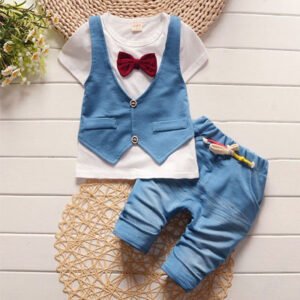
Co-ordinated clothing has become an increasingly useful option for parents who want a complete outfit without spending time matching individual pieces. A co-ord may pair a printed shirt with matching shorts, a T-shirt with trousers, or a coordinated top and bottom in complementary colours.
The biggest advantage is versatility. A good set should ideally provide more than one styling possibility. The top can work with denim, while the trousers can be paired with a plain T-shirt. This makes the purchase more useful than a highly specific outfit that can only be worn together.
Co-ords are particularly useful for holidays, weekend outings, birthday parties, casual family gatherings and relaxed travel outfits. For school use, always check the applicable uniform requirements before purchasing trend-focused pieces.
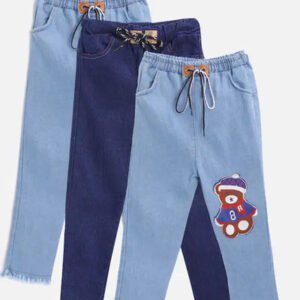
Boys’ bottoms are becoming more practical as fashion increasingly incorporates utility-inspired details. Cargo trousers, joggers, relaxed pants and drawstring styles can provide the comfort children need while creating a more modern outfit.
Cargo pockets can be useful, but more pockets do not automatically mean better quality. Examine how the pockets are positioned, whether they add excessive bulk and whether the closures are comfortable. For younger children, simpler designs can be preferable because there are fewer straps, cords or complicated fasteners to manage.
When buying trousers online, pay close attention to the actual waist measurement and inseam information rather than relying only on age labels.
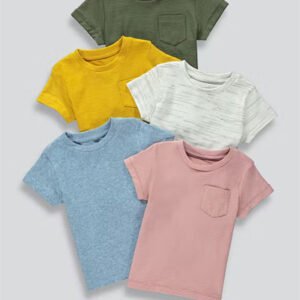
Graphic T-shirts remain an easy way for boys to express personal interests. Sports, cars, dinosaurs, animals, space, gaming-inspired artwork, typography, geometric patterns and playful illustrations can all work depending on the child's age and preferences.
The best graphic T-shirt is not necessarily the one with the largest print. Consider print placement, fabric weight and how the design behaves after washing. A high-quality basic T-shirt with a restrained graphic can be considerably more versatile than a highly elaborate novelty design.
If a T-shirt will be washed frequently, examine the print quality and follow the garment's care instructions. Avoid assuming that a higher price always guarantees better print durability; specifications and construction are more useful indicators.
Fabric choice should be one of the first considerations when buying boys’ clothing in India. A fashionable garment that is too warm, rough, heavy or poorly ventilated may remain unused.
Cotton remains a practical choice for many everyday boys’ garments because it can be comfortable, versatile and relatively easy to care for. Different cotton fabrics can feel very different, however. Jersey T-shirts, woven cotton shirts, poplin and lightweight cotton blends each have different characteristics.
Linen and linen-blend garments can be useful for warm-weather shirts and occasion outfits. They tend to have a naturally textured appearance and can provide an airy look, although wrinkle behaviour and care requirements should be considered.
Polyester and blended fabrics can be useful for sportswear, track-inspired garments and active clothing where quick drying or shape retention is desirable. Their suitability depends heavily on construction, fabric weight and ventilation.
Some lightweight blended or regenerated-fibre fabrics can provide a soft drape, but shoppers should check care requirements and durability rather than choosing based solely on softness at first touch.
Sportswear influences continue to shape casual boys’ clothing. Track-style stripes, relaxed sweatshirts, joggers, colour-blocking, athletic graphics and sneaker-friendly silhouettes can create outfits that feel current without requiring formal tailoring.
Streetwear does not have to mean oversized clothing from head to toe. A simple combination of a relaxed T-shirt, straight or tapered trousers and clean sneakers can provide the same modern effect with better versatility.
Brands such as Adidas, Puma, Nike, Levi’s, H&M, Max and Jack & Jones Junior can be useful reference points when comparing different approaches to casual, sporty or contemporary boyswear. Brand familiarity should not replace checking the individual garment's measurements, materials and care instructions.
Colour trends can be useful for discovering new styles, but parents should prioritise colours that coordinate with the child's existing wardrobe. A wardrobe built entirely around trend colours can become difficult to combine.
A practical approach is to use neutral or versatile colours for trousers and outer layers, then introduce stronger colours through T-shirts, shirts, co-ords or accessories. This makes it easier to build multiple outfits from a smaller number of garments.
Indian boys’ fashion cannot be separated from festive and cultural dressing. Kurta-pyjama sets, short kurtas, waistcoats, Nehru jackets, dhoti-inspired bottoms and Indo-Western combinations remain relevant for festivals, weddings, family functions and celebrations.
The modern direction is increasingly about making traditional clothing easier for children to wear. A lightweight kurta with comfortable trousers can be more practical than a heavily embellished outfit. Similarly, a simple short kurta can sometimes be paired with jeans or relaxed trousers for an Indo-Western look.
For children, understated detailing can often be more practical than excessive embroidery, beads or decorative elements. A versatile kurta can potentially be reused with different bottoms and accessories across multiple occasions.
Layering provides another way to update boys’ outfits without buying completely new wardrobes. Lightweight overshirts, denim jackets, casual bomber-style jackets, sweatshirts and thin shackets can transform a basic T-shirt-and-trousers combination.
For India's varied climate, layering is especially useful when temperatures change between morning and evening or when travelling between outdoor and strongly air-conditioned environments.
The most valuable trend may be the move toward versatility. Instead of purchasing ten outfits that each work only as complete sets, consider buying individual pieces that can create numerous combinations.
For example, one navy pair of trousers could work with a white T-shirt, graphic tee, polo shirt, casual shirt or lightweight sweatshirt. A denim overshirt could work with shorts, joggers or chinos. A simple kurta could be worn with traditional bottoms for festivals and potentially with jeans for a more relaxed Indo-Western outfit.
The exact quantity depends on the child's school routine, laundry frequency, climate, age and activities. The goal is not a fixed number but maximum outfit combinations from practical pieces.
For younger children, comfort and ease of dressing should take priority over complicated styling. Elasticated waistbands, soft fabrics, wide neck openings where appropriate and simple fastenings can make everyday dressing easier.
Avoid clothing with unnecessary cords, loose decorative pieces or complicated closures when they are unsuitable for the child's age or activity. Check garment construction carefully, particularly around buttons, snaps and decorative attachments.
School-age children often become more particular about colours, characters, sports and graphics. This is a good stage for combining practical basics with a few trend-led pieces.
Choose durable everyday bottoms, comfortable T-shirts and easy shirts as the foundation. Trend-driven graphics can then be added without making the entire wardrobe dependent on one aesthetic.
Pre-teens often have stronger opinions about personal style. Relaxed streetwear, minimal graphics, sporty outfits, denim, cargo trousers and layered looks can provide room for individual expression.
At this stage, it is particularly useful to involve the child in selecting colours and silhouettes while still checking fabric quality, fit and practicality.
Age-based sizing is only a starting point. Children of the same age can differ considerably in height, build and proportions. Always check the retailer's individual size chart where one is provided.
Do not assume that buying two sizes larger is automatically economical. Oversized clothing may be uncomfortable today and may still fit poorly when the child grows into it. A better approach is to compare actual garment measurements and choose a reasonable amount of growing room.
Two garments can both be described as cotton and still feel completely different. Fabric weight, knit structure, yarn quality, finishing, weave and garment construction all influence performance.
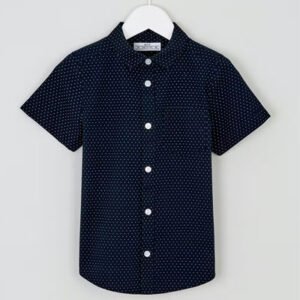
For T-shirts, examine the fabric surface, collar construction and stitching. For trousers, check waistband construction, pocket reinforcement and seam quality. For shirts, examine button attachment, collar construction and side seams.
Children's clothing generally experiences more frequent washing than many adult garments. Food stains, dust, outdoor play, school activities and repeated wear can quickly expose weak construction.
Before buying, check whether the garment can be washed using the routine already followed at home. A beautiful outfit that requires unusually complicated care may not deliver good practical value.
Online photographs can make comparison difficult because lighting, styling and image editing may change how garments appear. A better buying process focuses on information that is harder to manipulate.
Do not judge value solely by the number of pieces in a set. A three-piece outfit that uses versatile, durable garments may be more useful than a five-piece set containing items that are difficult to combine or uncomfortable to wear.
Customer reviews can provide useful clues, but individual experiences should not be treated as universal facts. Look for repeated observations rather than focusing on one extremely positive or negative comment.
Reviews become more useful when they are combined with the manufacturer's or retailer's size chart and specifications. A single review saying “small” is less informative than several reviews describing measurements or explaining how the garment fits relative to the child's usual size.
A photograph captures the outfit at one moment. Children experience the garment through movement, heat, sitting, playing and washing. Prioritise wearability alongside appearance.
Marketing descriptions such as “luxury”, “premium” or “comfort” are less useful than a clear fibre composition and care instructions.
Age labels vary between brands and product categories. Actual measurements provide a better basis for comparison.
Fashion changes quickly. A wardrobe built around neutral basics plus a smaller number of trend-led pieces is usually easier to update.
Parents may choose an outfit because it looks attractive, but if the child dislikes the colour, fit or fabric, the garment may rarely be worn.
For rapidly growing children, versatility matters. Consider whether a festive shirt, kurta, jacket or trouser can be reused for another event or styled differently.
Indian summers can make fabric and fit more important than seasonal fashion trends. Lightweight, breathable clothing with enough room for movement is generally easier to wear during hot conditions.
Dark colours are not automatically unsuitable for summer, but fabric weight, breathability and fit should be considered together rather than choosing colour alone.
During humid or rainy periods, drying time becomes an important practical consideration. Clothing that takes a long time to dry can be inconvenient when laundry cycles are frequent.
Look for garments that suit the household's washing and drying conditions. Keep spare everyday outfits available for children who spend time outdoors, and consider whether the fabric remains comfortable when humidity is high.
Winter wardrobes can combine fashion and layering. Sweatshirts, hoodies, jackets, warm trousers, full-sleeve T-shirts and layered casual outfits provide multiple styling options.
Instead of buying a very heavy outer layer that may be suitable for only a narrow temperature range, consider a layering system. A T-shirt or thermal base, sweatshirt and lightweight jacket can offer more flexibility depending on the conditions.
Partywear does not have to be uncomfortable. A smart casual shirt with trousers, a polo-style top with chinos, a coordinated set or a simple jacket can create a polished look without excessive tailoring.
For younger boys, prioritise comfortable waistbands and soft fabrics. For older children, colour coordination and layering can create a more sophisticated appearance without requiring formal suits.
Indian celebrations create opportunities for traditional and fusion styling. Kurta-pyjama sets, waistcoat combinations, short kurtas, Nehru jackets and dhoti-inspired outfits can all work depending on the occasion.
When selecting festive clothing, think beyond the event itself. A simple kurta may be useful for several celebrations, while a heavily embellished outfit may have limited future use. Comfortable footwear and movement should also be considered because children may spend several hours wearing the complete outfit.
Brand names can help narrow a search, but the right choice still depends on the individual product. Availability, sizing, materials and designs can vary between collections and seasons.
Use brands as a starting point rather than assuming that one brand is automatically best for every category. A brand that works well for denim may not be the best choice for ethnic wear, sleepwear or summer basics.
A limited budget does not require sacrificing style. The key is to spend first on high-use garments and add trend-specific items selectively.
After the basic wardrobe is covered, use graphic T-shirts, co-ords, cargo trousers, statement colours or fashionable jackets to introduce current trends. This approach keeps the wardrobe modern without making every purchase dependent on a short-lived fashion cycle.
Consider cost per useful wear rather than purchase price alone. A garment worn repeatedly for school holidays, weekends and travel may offer more value than an inexpensive outfit worn once.
A trend is worth considering when it matches the child's lifestyle, comfort requirements and existing wardrobe. It is less useful when it requires buying several additional items just to complete one look.
For example, relaxed trousers can be integrated with existing T-shirts. A new colour can be added through one shirt. A co-ord can be purchased when both pieces can also work separately. These are lower-risk ways to participate in current fashion.
Skip a trend when it compromises comfort, requires excessive maintenance, fits poorly or does not match the child's activities. Children's fashion should support childhood rather than make everyday movement difficult.
If a child dislikes a particular silhouette, forcing the trend is unlikely to create a useful purchase. A comfortable classic outfit can look more polished than an uncomfortable fashion-forward one.
A good purchase should satisfy several criteria simultaneously. It should fit correctly, feel comfortable, suit the intended climate, survive the expected washing routine and coordinate with other garments. Style matters, but it is only one part of the decision.
The strongest buying decisions also account for how quickly children grow. A garment with excellent construction may still have limited value if the child is likely to outgrow it before getting sufficient wear. Conversely, buying extremely cheap clothing repeatedly can become expensive if the garments lose shape or become unusable quickly.
Relaxed fits, co-ord sets, cargo and jogger-style bottoms, graphic T-shirts, sporty streetwear, breathable fabrics, versatile layering and modern ethnic clothing are among the most useful trends to consider.
Relaxed and oversized-inspired silhouettes are popular, but the best choice depends on the child's proportions and activity. Intentionally relaxed clothing is preferable to simply buying a much larger size.
They can be. Their strongest advantage is convenience, and they become even more useful when the top and bottom can also be styled independently.
There is no single best fabric for every situation. Lightweight cotton can be a practical everyday option, while blends and performance fabrics may be useful for sports or specific activities. Climate, garment construction and care requirements should all be considered.
Lightweight, breathable clothing with comfortable fits is generally practical. Cotton T-shirts, shorts, lightweight shirts and relaxed co-ord sets can work well when their fabric and construction suit the conditions.
Cargo pants can be useful for casual wear because they combine a contemporary appearance with practical storage. Choose comfortable waistbands and avoid unnecessary bulk for younger or highly active children.
Navy, beige, cream, olive and grey remain useful foundations, while brighter shades such as blue, green, orange and yellow can add personality. The best colour depends on the child's preferences and the rest of the wardrobe.
Yes. Kurta sets, waistcoats, Nehru jackets and Indo-Western combinations remain useful for festivals, weddings and family occasions. Comfortable fabrics and easy movement are especially important for children.
Measure the child and compare those measurements with the individual product's size chart. Do not rely solely on age ranges because sizing can differ between brands and garment types.
A combination is usually more practical. Build the wardrobe around versatile basics and add a smaller number of trend-focused pieces to provide variety and personal style.
There is no universal number. Consider school requirements, laundry frequency, climate, age, sports activities, travel and how often the child needs formal or festive clothing.
Pay particular attention to repeated comments about sizing, fabric feel, shrinkage, stitching, colour, comfort and wash performance. Compare review patterns with the listed specifications.
The latest boys’ fashion trends in India are most useful when they make children's wardrobes more comfortable, flexible and expressive. Relaxed silhouettes, co-ords, utility trousers, graphic T-shirts, sporty outfits, breathable fabrics and modern ethnic wear can all have a place in a well-planned wardrobe.
Before buying, start with the child's actual needs rather than the trend itself. Consider the climate, age, daily activities, school requirements, favourite colours, growth rate and existing wardrobe. Then compare fabric composition, measurements, construction, customer feedback and care instructions.
For an independent buying decision, compare several products in the same category instead of choosing the first attractive photograph. Check current specifications and retailer information before purchase because designs, sizes, stock, prices, offers and policies can change during 2026.
The most sensible approach is to combine dependable wardrobe basics with a smaller selection of current trends. That gives boys room to enjoy modern fashion while ensuring that the clothing remains comfortable, practical and useful beyond a single season.