

♥ Wishlist
Compare 66 verified Suitcase Trolley Bags for Easy and Comfortable Travel products in India. Reviews, ratings, pros, cons and buying advice updated for October 2026.


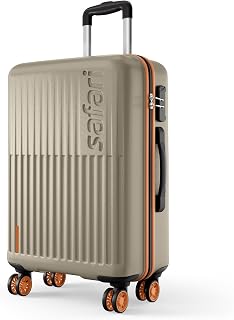


The suitcase market in India has moved beyond simply choosing between a hard case and a soft bag. In 2026, buyers are increasingly comparing luggage by shell construction, empty weight, wheel design, telescopic-handle stability, internal organisation, security features, expandable capacity and the practicality of the suitcase for Indian roads, railway platforms, airports and different travel styles.
For an independent buying decision, the most useful approach is to compare specifications rather than selecting a suitcase solely because it appears fashionable or has a high rating. Brands such as Samsonite, American Tourister, Safari, VIP, Kamiliant, Mokobara and Nasher Miles offer different combinations of materials, sizes, features and price positioning, so the best suitcase depends on how and how often you travel.
The best trolley suitcase is not necessarily the largest, lightest or most expensive model. It should match your travel frequency, transportation methods, packing habits and baggage requirements. A suitcase used mainly for occasional family holidays has different priorities from one used every month for business travel.
Suitcase sizes are generally described as cabin, medium and large, although manufacturers do not always use identical dimensions. This means the advertised category should not replace checking the actual external measurements.
Always distinguish between case dimensions and packing capacity. Two suitcases with similar external dimensions can provide different usable space because of shell thickness, wheel housings, handle channels and interior construction.
One of the easiest mistakes is comparing luggage by litres alone. A suitcase may provide generous internal capacity but weigh substantially more before anything is packed inside.
For air travel, empty weight matters because baggage allowances apply to the total packed weight. A lighter suitcase can leave more of the allowance available for clothes and personal belongings. However, reducing weight should not mean accepting a poorly constructed wheel system, weak handle or inadequate shell protection.
Hard luggage is commonly manufactured using materials such as polypropylene, polycarbonate and ABS, with some models using combinations or specialised formulations.
Polycarbonate is widely used for luggage that aims to balance relatively low weight with impact resistance and flexibility. It can be a strong choice for travellers who regularly check luggage and want a hard case that can tolerate handling.
Polypropylene luggage is valued for its flexibility and relatively light construction. Depending on the design and formulation, it can provide a useful balance between weight and durability.
ABS is commonly found in more budget-oriented hard-shell luggage. It can provide an attractive rigid exterior at an accessible price, but buyers should assess the complete construction rather than judging the suitcase solely by its material label.
Some luggage uses multiple materials or different materials for the shell, frame, lining and structural components. When comparing products, look for the manufacturer's stated material rather than assuming that every hard-shell suitcase has the same durability characteristics.
Neither construction is universally superior. The better choice depends on what you carry and how you travel.
For frequent air travel, the choice should also consider how much protection, flexibility and internal organisation you need. For road trips and train journeys, easy-access pockets can sometimes be more useful than the rigid construction of a conventional hard case.
Wheels are among the most important components of a trolley suitcase because they carry the load and experience repeated contact with floors, pavements, ramps and uneven surfaces.
Four-wheel luggage can rotate and move in multiple directions, making it particularly convenient inside airports, railway stations, hotel corridors and other smooth environments. The ability to roll the case beside you can reduce the need to pull it at an angle.
Two-wheel designs can be useful on surfaces where larger spinner wheels might be vulnerable or where the suitcase needs to be pulled behind the traveller. Their behaviour differs from spinner luggage, so buyers should consider the environments in which the bag will be used.
A trolley bag can have an excellent shell and still be frustrating to use if its handle feels unstable or awkward. The telescopic handle should provide a comfortable height and lock securely at its intended positions.
When comparing luggage, examine the handle design, grip shape, number of height positions and how much of the mechanism occupies the interior. Large internal handle channels can reduce usable packing space, particularly in smaller cabin cases.
The closure system deserves attention because the zipper or frame is repeatedly opened, closed and loaded under pressure.
A built-in combination lock can be convenient because there is no separate padlock to carry. TSA-compatible locking systems are particularly relevant to travellers flying internationally because authorised airport security procedures in participating countries can use appropriate access methods without requiring the traveller's personal combination.
A luggage lock should not be treated as theft-proof protection. It is primarily a deterrent and a way to secure the case during ordinary handling. Avoid choosing a suitcase solely because it advertises a lock; examine the complete construction, closure system and practicality of the luggage.
Good interior design can make a suitcase feel larger and easier to use even when its measured capacity is similar to another model.
More compartments are not automatically better. Excessive internal dividers can consume usable space. If you normally use packing cubes, simple interiors may actually provide greater flexibility.
An expandable trolley can be valuable for travellers who return with additional clothing, gifts or purchases. However, expansion should be used deliberately rather than treating it as unlimited capacity.
Before buying an expandable suitcase, compare its normal and expanded dimensions. If you primarily travel by air, check the applicable baggage dimensions and weight limits before using the expansion section.
Cabin luggage is particularly sensitive to dimensions because airlines can apply specific limits. A product described as a cabin trolley by a retailer should not automatically be assumed to meet every airline's requirements.
A medium suitcase is often easier to manoeuvre and less tempting to overpack. A large suitcase can provide considerably more space but may become difficult to lift, transport and keep within airline weight restrictions.
If you frequently travel alone for several days, choosing the largest possible suitcase may be unnecessary. Families sharing luggage may benefit from larger capacity, provided the combined weight and handling requirements are manageable.
For air travel, prioritise weight, dimensions, wheel quality, handle reliability and practical packing capacity. Airline policies can differ and may change, so current baggage rules should be checked before every flight rather than relying on a suitcase's marketing category.
For checked baggage, a durable shell and protected wheels become more important because the suitcase can experience handling outside the traveller's direct control. For cabin baggage, compact dimensions and low empty weight usually deserve greater emphasis.
Indian railway travel creates different requirements from air travel. Travellers may need to move luggage across platforms, through station entrances and exits, over uneven flooring and into compartments.
A suitcase intended primarily for train journeys should therefore be evaluated for wheel clearance, handle comfort, lifting points and overall manoeuvrability. A very large hard-shell suitcase can be inconvenient when stairs or narrow spaces are involved.
Road trips offer more flexibility in luggage size because airline cabin and checked baggage limits may not apply. Even so, oversized luggage can consume boot space and become difficult to handle at hotels and other stops.
For car travel, consider how many travellers are sharing the luggage compartment, whether you will frequently move the cases and whether soft luggage could make better use of irregular storage space.
Frequent travellers should place durability and repairability ahead of decorative features. The components most worth examining include:
If you travel only a few times each year, paying for highly specialised luggage may not be necessary. A straightforward trolley with dependable wheels, an appropriately sized interior, a functional handle and sensible organisation can be more useful than a case filled with features you rarely use.
Occasional buyers should also consider storage. A suitcase that is easy to clean, easy to store and suitable for multiple types of trips can offer more practical value than luggage designed for only one travel scenario.
Well-known luggage brands often have several ranges aimed at different budgets and travel requirements. Samsonite is commonly associated with premium-oriented luggage, while American Tourister covers a broad range of everyday travel products. Safari and VIP have extensive recognition in the Indian luggage market, while Kamiliant, Mokobara and Nasher Miles provide additional alternatives across different design and feature approaches.
Brand reputation should be one part of the buying decision rather than the entire decision. Compare the individual model's dimensions, empty weight, material, wheel configuration, warranty terms, internal organisation and current customer feedback before choosing.
Customer ratings can be useful, but an average score does not reveal everything about a suitcase. Read reviews for recurring observations rather than focusing on isolated praise or complaints.
A handful of reviews should not automatically determine a purchase. Check whether complaints refer to the exact model and size you are considering and whether recent listings differ from older versions.
A stylish suitcase can still have unsuitable dimensions, excessive empty weight or inconvenient internal organisation. Design should complement function rather than replace it.
More capacity can encourage overpacking and make the case difficult to lift. Select capacity based on the amount you realistically carry.
A heavy suitcase consumes part of an airline's baggage allowance before packing begins.
The number of wheels does not tell you everything about performance. Wheel size, housing, attachment, materials and overall case balance also matter.
Nominal categories such as cabin, medium and large vary among manufacturers. Always check the published measurements.
The telescopic handle is a high-use component. A suitcase that is difficult to steer or adjust can quickly become inconvenient.
Wheel housings, handle channels, dividers and internal structures can reduce practical packing space.
Price can reflect materials, design, branding and features, but it should not be treated as a standalone measure of reliability.
When two trolley bags look similar, use a structured comparison instead of making the decision from photographs.
Before purchasing, record these details for each shortlisted model:
There is no universal price point that guarantees the right luggage. A sensible budget should be based on how frequently you travel and which specifications matter most.
For occasional travel, focus on essential functionality and avoid paying extra for features that will not be used. Frequent travellers may reasonably place greater value on construction, wheel systems, handle design, weight and manufacturer support. Premium luggage can be worth considering when its additional features and construction genuinely match your travel needs.
Because online prices, discounts and promotions can change, compare the current selling price with the exact model's specifications instead of relying on an old price reference.
Dust and grime can accumulate on luggage during airport, railway and road travel. Follow the manufacturer's cleaning instructions and use only cleaning methods appropriate for the suitcase material.
Check wheels after trips for trapped hair, thread, dirt or other debris. Do not use aggressive chemicals or lubricants unless the manufacturer recommends them for the specific wheel mechanism.
Excessive packing can place unnecessary stress on zippers, seams, handles and wheels. The suitcase should close naturally rather than requiring force to shut it.
Store luggage in a dry location away from excessive moisture. If possible, keep the suitcase clean and dry before putting it away for an extended period.
Extend and retract the telescopic handle to confirm that it operates normally. Detecting a problem before leaving home is considerably more convenient than discovering it at an airport or railway station.
Travel in India can involve a combination of polished airport floors, station platforms, pavements, hotel entrances, car boots and uneven outdoor surfaces. This makes overall manoeuvrability particularly important.
A suitcase should be comfortable to lift when stairs or curbs make rolling impractical. Wheel performance matters, but so do the top and side handles. For travellers who frequently move between different transport modes, a moderate-size case can be easier to manage than an oversized model.
Colour is primarily a personal preference, but it can have practical consequences. Very common colours can make luggage harder to distinguish from similar cases at baggage collection. A distinctive colour, pattern or luggage tag can make identification easier.
Glossy surfaces can make scratches and marks more visible, while textured finishes may disguise everyday scuffs more effectively. Fabric luggage can also show dirt differently depending on its colour and material.
A luggage set can be useful for families or travellers who want multiple sizes with a consistent design. However, buying a set is not automatically better value than choosing individual cases.
Before selecting a set, check whether every size is genuinely useful. A three-piece set may contain a large suitcase that is rarely used, while purchasing a cabin and medium case separately could better match your travel habits.
A cabin trolley can be preferable when you want structured packing, easy access to clothing and reduced weight on your shoulders. A backpack may be better when you expect to use stairs frequently, walk long distances or carry your belongings through crowded areas.
Some travellers benefit from using a compact trolley together with a small personal bag, subject to the airline's current baggage rules.
A suitcase generally provides more structured organisation and easier rolling, while a duffel can be lighter and more flexible. If you regularly travel through airports and carry heavier loads, wheels and a telescopic handle can significantly improve convenience.
Instead of starting with ten products and trying to rank them immediately, narrow the market in stages. First choose the required size. Then eliminate models that are too heavy or exceed your intended dimensions. After that, compare materials, wheel systems, handles, organisation and security features.
Finally, compare current customer feedback, warranty information and current pricing for the remaining models. This process makes a product comparison more meaningful than simply selecting the highest-rated listing.
The strongest suitcase choice for 2026 is the one that fits your actual travel pattern rather than the one with the longest feature list. Start with dimensions and empty weight, then evaluate material, wheels, handle construction, closure system, interior organisation and security features.
For Indian travellers, also think about the practical journey beyond the airport: railway platforms, stairs, pavements, hotel corridors, car storage and repeated lifting can expose weaknesses that are not obvious from product photographs.
When comparing models from brands such as Samsonite, American Tourister, Safari, VIP, Kamiliant, Mokobara and Nasher Miles, compare the exact product specifications instead of assuming that all models from a brand have the same construction or durability. Read recent verified customer feedback, check the manufacturer's stated warranty and specifications, and compare today's price before making a purchase.
There is no single best suitcase for every traveller. The right choice depends on required size, empty weight, material, wheel configuration, travel frequency, budget and whether the luggage will be used mainly for flights, trains, road trips or international travel.
Polycarbonate, polypropylene and ABS each have different characteristics. Polycarbonate is commonly considered when balancing durability and weight, polypropylene can provide flexibility with relatively low weight, and ABS is widely used in more budget-oriented hard-shell designs. Compare the complete construction rather than selecting solely by material name.
Four-wheel spinners are particularly convenient on smooth surfaces because they can move in multiple directions. Two-wheel luggage can be useful when pulling the case across certain uneven surfaces. Your travel environment should determine the choice.
Not universally. Hard-shell luggage can provide a structured exterior and is often easy to clean, while soft luggage can offer flexible packing and convenient external pockets. Choose according to the type of belongings you carry and how you travel.
The correct size depends on the airline, route and baggage allowance. Always check the current airline dimensions and weight limits rather than relying only on labels such as cabin, medium or large.
It can be useful if you frequently need additional packing space, especially on return journeys. However, expansion can increase the external depth and make the suitcase easier to overpack, so check airline restrictions before using it.
No. A TSA-compatible lock is a convenient luggage security feature, but it should not be considered theft-proof protection. Avoid placing irreplaceable valuables in checked luggage.
It is particularly important for air travel because the suitcase itself contributes to the total baggage weight. Comparing empty weight can reveal a significant difference between apparently similar models.
Only if those compartments suit your packing habits. Dividers and pockets can improve organisation, but excessive internal structures may reduce usable space. Packing cubes can provide additional organisation inside a simpler suitcase.
Frequent travellers should prioritise dependable wheels, a stable telescopic handle, suitable construction, manageable empty weight, practical internal organisation and clear manufacturer warranty information.
Look beyond the shell material. Examine wheel construction, handle attachment, corner protection, zipper or frame construction, stitching on soft luggage, internal component quality and recurring customer feedback for the exact model.
A recognised brand can make it easier to compare established product ranges and manufacturer information, but the brand name alone does not determine whether an individual suitcase is suitable. Compare the exact model's specifications, warranty and customer feedback.
Inspect them before major trips and after demanding journeys. Remove visible debris where appropriate and follow the manufacturer's maintenance instructions.
You can, but it may be inconvenient for short journeys and can encourage unnecessary packing. A smaller cabin or medium suitcase may be easier to manoeuvre and transport when you do not need large capacity.