
♥ Wishlist
Compare 50 verified Beard Growth Oil for Men products in India. Reviews, ratings, pros, cons and buying advice updated for October 2026.


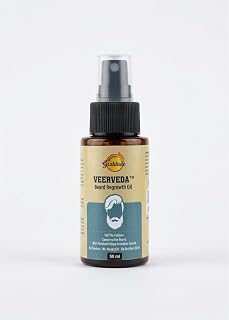

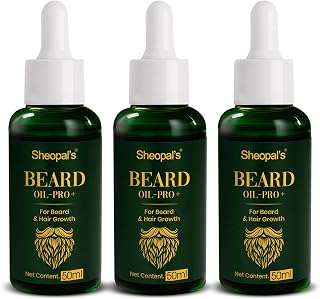

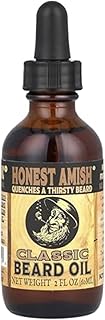
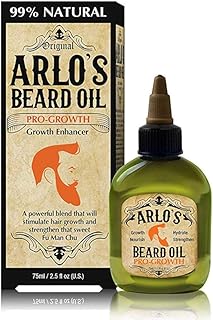


Beard growth oils are widely used in India as grooming products designed to condition facial hair, soften rough strands, moisturise the skin underneath the beard and improve the overall appearance of a fuller, healthier-looking beard. However, an important distinction should be made before comparing products: a cosmetic beard oil can support beard and skin care, but it should not automatically be treated as a clinically proven treatment for increasing the number of hair follicles or reversing genetically determined sparse growth.
For shoppers comparing the latest beard growth oil trends in 2026, the most useful approach is to look beyond attractive packaging and claims such as “fast growth” or “thicker beard.” Ingredient quality, skin compatibility, fragrance, texture, ease of application, bottle design, value for money and the credibility of the product information are more practical comparison points.
Popular Indian grooming brands such as Ustraa, Beardo, The Man Company, Bombay Shaving Company, Man Arden, Mamaearth and UrbanGabru are among the names shoppers may encounter while researching beard oils and related grooming products. Individual formulas differ substantially, so brand recognition alone should not determine the final choice.
The phrase “beard growth oil” is used broadly in the Indian grooming market. Some products primarily function as beard conditioners, while others are marketed around ingredients traditionally associated with hair and scalp care. Understanding this distinction can prevent unrealistic expectations.
This is one of the most important questions to consider before buying. Beard density is influenced by genetics, age, hormonal factors and individual follicle characteristics. Applying a cosmetic oil cannot be assumed to create new hair follicles or guarantee a thicker beard.
What a well-formulated beard oil can do is improve the condition of the existing beard and surrounding skin. Hydrated skin can feel more comfortable, while conditioned facial hair can appear smoother, darker or fuller simply because the strands are less dry and unruly.
Some beard oils contain ingredients traditionally used in hair and skin care, such as castor oil, coconut oil, jojoba oil, argan oil, almond oil or herbal extracts. Their presence can make a formula attractive for conditioning purposes, but ingredient inclusion alone is not proof that the finished product will increase beard density.
Shoppers should therefore separate three different expectations: improving beard appearance, improving skin and hair conditioning, and medically treating hair loss or sparse growth. These are not interchangeable objectives.
Castor oil is frequently featured in beard-growth-oriented products because of its thick texture and reputation in traditional hair-care routines. It can help provide a rich conditioning feel, but consumers should not interpret the presence of castor oil as a guarantee of new beard growth.
Jojoba oil is popular in grooming formulations because its lightweight feel can work well for facial skin and hair. It is often worth considering for shoppers who dislike extremely greasy beard oils.
Argan oil is commonly used in hair and grooming products for conditioning. It can be a useful ingredient when the primary goal is softer, smoother facial hair rather than maximum styling hold.
Coconut oil is widely available and familiar to Indian consumers. It can provide conditioning and a richer oil feel, although individual skin types respond differently to heavier oils.
Almond oil appears in many cosmetic hair and skin formulations. It can contribute to a smooth, moisturising feel and may suit shoppers looking for a traditional oil-based grooming routine.
Vitamin E is frequently included in cosmetic formulas as an antioxidant and conditioning ingredient. Its presence can complement a broader oil blend, but it should not be treated as proof of a beard-growth effect.
Ingredients such as amla, bhringraj, rosemary, aloe vera and other botanical extracts may appear in beard-care formulas marketed toward growth or strengthening. Botanical ingredients can make a product appealing to shoppers who prefer plant-derived formulations, but “natural” does not automatically mean more effective or suitable for every skin type.
The front of a bottle is primarily marketing. The ingredient list is more useful when comparing two otherwise similar products.
Short facial hair often benefits from a lightweight product that reaches the skin without leaving a heavy residue. A fast-spreading oil can be easier to apply when the beard is only a few millimetres long.
As facial hair becomes longer, conditioning becomes more important because the hair can feel rougher and become harder to control. A moderately rich oil can work well for this stage.
Long beards generally require more attention to the hair shaft as well as the skin. A richer conditioning oil may be useful, particularly on dry beard ends. Some users may prefer combining oil with a beard balm or other styling product.
Coarse facial hair can benefit from a formula that provides substantial lubrication and conditioning. The objective is usually improved softness and manageability rather than simply choosing the thickest oil available.
People who experience facial oiliness may prefer lighter formulas and smaller quantities. Applying excessive oil can create an uncomfortable greasy layer, particularly in India's hot and humid conditions.
Climate should be part of the buying decision. A beard oil that feels comfortable in a dry winter environment may feel excessively heavy during a hot and humid Indian summer.
More oil does not necessarily produce better results. Application should generally be adjusted according to beard length, hair density, skin type and the thickness of the formula.
Many grooming routines use beard oil after washing because clean facial hair is easier to condition. Applying it after a shower can also make distribution easier, although the beard should not be soaking wet.
A practical routine is to cleanse the beard, gently towel-dry it, allow excess moisture to disappear and then apply a small quantity of oil. The exact frequency depends on skin type, beard length and personal preference.
These products overlap but are designed for different grooming priorities.
Start with the ingredients rather than the advertising headline. Consider whether the formula matches your goal: lightweight daily conditioning, intensive softness, skin moisturisation or beard manageability.
A larger bottle is not automatically better value. Compare the quantity with the expected application rate and the overall formula quality.
A controlled dispenser can make it easier to use a small quantity without repeatedly opening a wide bottle. This matters because beard oil is usually used in small amounts.
Fragrance is a personal preference. Some shoppers enjoy woody, citrus, spicy or traditional masculine scents, while others prefer subtle or fragrance-free options. If the oil will be used every day, scent longevity and intensity can matter as much as the ingredient profile.
A good daily-use formula should be comfortable enough for your skin and beard. Excessively greasy residue can become inconvenient when wearing masks, commuting or working in warm conditions.
The best beard oil for one person can be unsuitable for another. Sensitive skin requires greater attention to fragrance, botanical ingredients and individual sensitivities.
Look for clear manufacturer information, ingredient disclosure, directions for use, quantity, batch information and applicable product details. Transparent packaging information makes comparison easier.
Claims about extremely rapid beard growth can create unrealistic expectations. Beard development is not controlled solely by topical moisturisation, and individual growth patterns vary considerably.
A powerful fragrance can initially seem attractive, but daily grooming requires considering whether you actually enjoy wearing that scent for several hours.
Overapplication can leave facial hair looking greasy rather than healthy. It can also make the skin feel uncomfortable.
A rich oil may be suitable for dry skin but feel excessive on oily skin. The skin underneath the beard should be considered as carefully as the beard itself.
Plant-based and botanical ingredients can still cause irritation or sensitivity in some individuals. Natural origin is not a guarantee of universal compatibility.
Two products may have noticeably different prices but also substantially different bottle sizes. Compare cost relative to quantity and expected usage rather than looking only at the listed selling price.
A useful comparison should evaluate products using the same criteria rather than simply ranking whichever product has the most prominent marketing claims.
Customer reviews can provide useful information, but they should be interpreted carefully. A review saying that a beard became thicker after using an oil does not establish that the product caused new hair growth. Beard growth naturally changes with age and time, and photographs or subjective impressions can be difficult to compare.
More useful reviews focus on observable product characteristics.
When researching a product, prioritise verified-purchase feedback where available and look for recurring patterns rather than relying on one unusually positive or negative review.
A simple routine is generally easier to maintain than an elaborate grooming schedule.
The oil itself is only one part of a grooming routine. A suitable comb or brush can help distribute the product more evenly, while scissors or a trimmer can help maintain shape.
Patchiness is one of the most common reasons people search for beard-growth products. However, a cosmetic oil should not be expected to fill genetically sparse areas automatically.
For someone with a patchy beard, grooming can still make a meaningful difference to appearance. Keeping the beard at a suitable length, maintaining clean edges and conditioning the existing hair can create a more uniform overall appearance.
If sudden or unusual changes in facial hair growth occur, or if there are areas of hair loss accompanied by other skin changes, a qualified healthcare professional or dermatologist can provide more appropriate advice than a cosmetic product comparison.
Beard development can continue changing through early adulthood, and individual timelines vary. Someone comparing beard oils should therefore avoid assuming that a product is responsible for every change observed over several months.
This is particularly important for younger consumers who may naturally experience increasing facial-hair density as they mature. A consistent grooming routine can improve presentation while natural development continues.
Before applying a new cosmetic product extensively to the face, it is sensible to review the ingredient list and follow the manufacturer's directions. People with known sensitivities should be particularly careful with fragranced or botanical-heavy formulas.
Cosmetic oils generally benefit from sensible storage. Keep the container closed when not in use and follow any storage directions provided on the packaging. Excessive heat, direct sunlight and poor sealing can affect cosmetic products over time.
For Indian households, avoiding prolonged exposure to intense heat is particularly practical. A cool, dry storage location away from direct sunlight is generally preferable when consistent with the manufacturer's instructions.
Value is more complicated than the lowest purchase price. A comparatively inexpensive oil may provide poor value if its texture makes you use excessive amounts, while a more expensive formula may last longer if only a few drops are needed per application.
Indian shoppers may encounter a broad range of beard oils from established grooming and personal-care brands. Names such as Ustraa, Beardo, The Man Company, Bombay Shaving Company, Man Arden, Mamaearth and UrbanGabru can be included in a wider comparison, but the best choice depends on the specific formula rather than the brand name alone.
When comparing these and other brands, check the exact product variant, ingredient list, bottle size, usage directions and current customer feedback. Different variants from the same brand can have different fragrances, textures and ingredient combinations.
A top-10 list should be treated as a comparison framework rather than a universal ranking. The ideal product depends on what the shopper values most.
There is no single beard oil that is objectively best for every Indian consumer. The right option depends on beard length, skin type, preferred fragrance, desired texture, ingredients and budget. Compare the exact formula and current customer feedback before purchasing.
Cosmetic beard oils should not be assumed to significantly accelerate facial-hair growth or create new follicles. Their more established grooming role is conditioning the beard and moisturising the surrounding skin. Individual beard development is influenced by factors that a cosmetic oil cannot necessarily control.
Usage depends on the formula, beard length and skin type. Many users incorporate oil into a daily routine, while others use it less frequently. Follow the product directions and adjust the quantity based on how your beard and skin respond.
Yes. Short facial hair can still benefit from conditioning, although the amount required is usually smaller than for a long beard. A lightweight formula may be particularly convenient at this stage.
Many beard oils are formulated for regular grooming use, but suitability depends on the individual product and your skin. Follow the manufacturer's directions and avoid excessive application.
Castor oil is commonly included in hair and beard products, but its presence does not establish that it will create new beard growth. It is more appropriate to view it as one component of a conditioning formulation rather than a guaranteed growth treatment.
Rosemary and rosemary-derived ingredients are used in various hair-care products, but consumers should distinguish cosmetic grooming claims from evidence for treating facial-hair loss. Concentrated essential oils can also require appropriate dilution and may irritate sensitive skin.
For a typical beard-conditioning routine, the product can be distributed through the beard while also reaching the skin underneath. The exact application method should follow the product's directions.
A cosmetic beard oil should not be expected to eliminate naturally sparse areas or guarantee uniform beard density. Grooming, trimming and conditioning can improve the appearance of existing hair, while persistent or unusual hair loss may require professional evaluation.
Choose based on the objective. Beard oil is generally more focused on conditioning and moisturisation, while beard balm adds conditioning with some styling and control. Some long-beard routines use both products at different stages.
No. Price alone does not establish quality. Compare ingredients, quantity, formulation, dispenser, fragrance, directions and customer feedback instead.
There is no universal duration because usage varies with beard length, application frequency and the amount used each time. Longer and denser beards generally require more product than short stubble.
Some people may find certain rich or fragranced products uncomfortable for their facial skin. Skin responses vary, so introduce unfamiliar products carefully, avoid excessive application and discontinue use if persistent irritation or breakouts appear.
The suitability of an oil is determined more by its ingredients and intended cosmetic use than by gender. A conditioning oil can be used for suitable facial or hair-grooming purposes when the product directions permit it.
The best latest beard growth oil for an Indian shopper in 2026 is not necessarily the product with the strongest growth claim, highest price or most elaborate ingredient list. A better buying decision comes from matching the formula to your skin type, beard length, climate, fragrance preference and grooming objective.
For most shoppers, the most meaningful benefits to evaluate are conditioning, softness, manageability, skin comfort, application experience and formula transparency. Compare established grooming names such as Ustraa, Beardo, The Man Company, Bombay Shaving Company, Man Arden, Mamaearth and UrbanGabru alongside other available options, but judge each individual product on its specifications rather than relying on brand recognition alone.
Most importantly, keep cosmetic conditioning separate from medical hair-growth treatment. A good beard oil can be a useful part of a consistent grooming routine, but realistic expectations make it much easier to identify products that genuinely suit your needs.
Would you prefer the final comparison focused on budget picks, premium oils, or natural-ingredient formulas?