
♥ Wishlist
Compare 55 verified Men Jewellery Online for Stylish Everyday and Occasion Wear products in India. Reviews, ratings, pros, cons and buying advice updated for October 2026.


Men’s jewellery has moved well beyond a small collection of traditional rings and watches. In 2026, Indian buyers have a broad choice of chains, bracelets, rings, pendants, necklaces, earrings, kada-style bracelets and personalised pieces in materials ranging from sterling silver and stainless steel to gold and gold-plated finishes. The best choice depends less on following every fashion trend and more on matching the jewellery to your wardrobe, skin sensitivity, lifestyle, preferred metal colour and expected frequency of wear.
This independent buying guide focuses on the latest men’s jewellery trends relevant to shoppers in India. It explains what to look for before buying, how different materials behave with regular use, which designs work for different occasions, common purchasing mistakes and how to compare specifications rather than choosing solely from photographs.
Current men’s jewellery styling is increasingly versatile. Minimal pieces can be worn every day, while heavier chains, statement rings and traditional-inspired designs can create a more distinctive look. The strongest trends are not necessarily the most elaborate ones; they are designs that can work with multiple outfits and remain comfortable during normal use.
There is no single best men’s jewellery style for every buyer. A good purchasing decision starts by identifying how and where the piece will be worn. A chain selected for daily office use has different requirements from a statement necklace intended for weddings, parties or festive occasions.
For office environments, understated chains, simple rings and slim bracelets are usually easier to integrate with shirts, polos, trousers and formal footwear. For weddings and festive occasions, more detailed pieces can complement kurtas, sherwanis, bandhgalas and other traditional clothing.
Casual jewellery can be more experimental. Chunkier chains, layered necklaces, textured rings and darker finishes can work with denim, T-shirts, overshirts, jackets and streetwear. If one piece needs to serve several purposes, choose a restrained design that can transition between casual, smart-casual and occasion wear.
Before purchasing another piece, consider what you already wear. A large silver-toned chain may not be the most useful addition if your wardrobe already contains several similar pieces. Instead, a different profile, finish or category can provide more styling flexibility.
Material is one of the most important specifications to investigate because two pieces that look almost identical in photographs can differ substantially in durability, maintenance, weight, finish and price.
Sterling silver is a popular choice for men who prefer a genuine precious-metal option with a bright silver appearance. It can develop tarnish over time, particularly when exposed to air, moisture, cosmetics and certain chemicals. Regular cleaning and appropriate storage can help maintain its appearance.
When comparing sterling silver jewellery, look for clear material information rather than assuming that a silver-coloured product is made from silver. A seller's product description should distinguish sterling silver from silver-plated or silver-coloured materials.
Gold remains a significant choice in India, particularly for rings, chains and traditional jewellery. Gold purity is commonly expressed in karats, with higher-karat gold containing a greater proportion of gold. However, purity is not the only consideration: alloy composition affects colour, hardness and everyday wear characteristics.
For valuable gold jewellery, buyers should pay close attention to documented purity and applicable hallmark information rather than selecting a piece based solely on appearance. Gold jewellery should also be evaluated according to weight, workmanship, design and the terms supplied by the seller.
Gold-plated pieces can provide the visual appearance of gold at a lower purchase cost, but the surface coating can wear with repeated friction, moisture and exposure to chemicals. The longevity of the finish depends on construction, plating quality and how the item is used.
Gold-plated jewellery can be appropriate when fashion flexibility and appearance are more important than owning a solid precious-metal piece. It should not, however, be treated as equivalent to solid gold simply because both have a gold-coloured finish.
Stainless steel is widely used for contemporary men’s jewellery because it can offer a robust, modern appearance and relatively straightforward maintenance. It is particularly common in chains, bracelets and rings.
Stainless steel is often a practical option for buyers who want a lower-maintenance accessory for frequent wear. Nevertheless, product descriptions should still be checked for the exact grade or material specification when that information is provided.
Leather bracelets and mixed-material jewellery offer a softer alternative to all-metal designs. They pair naturally with casual clothing and can create a more relaxed appearance. Leather requires different care from metal and can be affected by water, sweat, prolonged moisture and unsuitable cleaning products.
Titanium and other specialised metals appear in some men's jewellery collections, particularly rings and modern minimalist pieces. These materials can appeal to buyers looking for distinctive weight, colour or material characteristics. Always check the actual composition because names such as “titanium style” or “metallic finish” do not necessarily mean the product is made entirely from titanium.
The same base material can produce very different visual results depending on its finish. Finish should therefore be considered separately from material.
Chains are among the easiest men’s jewellery pieces to style, but choosing the correct link pattern and thickness is important.
Curb chains feature interlocking links that generally sit relatively flat. Slim versions can work with everyday clothing, while heavier versions create a stronger statement.
Figaro designs commonly alternate link sizes, creating a recognisable rhythm along the chain. They provide more visual variation than a basic uniform-link chain and can work well when worn alone.
Rope chains have a twisted appearance and can reflect light from multiple angles. Their textured construction makes them visually noticeable even when the overall chain is not extremely thick.
Box chains use compact links that create a cleaner geometric appearance. They can be a useful choice for pendants when the chain's construction is appropriate for the pendant's weight.
Snake chains have a smooth, closely connected appearance. Their sleek profile can suit minimalist outfits, but buyers should pay attention to construction because flexibility and repairability can vary between designs.
Chain length changes where the jewellery sits on the chest and therefore affects both comfort and appearance. Neck size, clothing neckline and personal preference should all be considered.
Do not select a length based only on a model photograph. Body proportions differ considerably, so checking the actual chain measurement is more reliable.
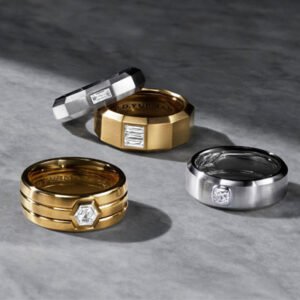
Men’s rings can be subtle or highly expressive. The most useful approach is to choose a design according to how frequently it will be worn and whether it needs to work with other accessories.
Plain bands are among the easiest rings to style. Their simplicity makes them suitable for casual clothing, business-casual outfits and formal occasions depending on the material and finish.
Signet rings have a broader face and historically served practical and symbolic purposes. Modern versions may feature initials, geometric designs, engraved motifs or completely plain surfaces.
Angular and architectural designs suit contemporary wardrobes. They can make a simple outfit more distinctive without requiring a large amount of jewellery.
Large rings can be effective as a focal accessory, but proportion matters. If the ring is visually dominant, keeping other jewellery relatively restrained can prevent the overall appearance from becoming cluttered.
Ring sizing deserves more attention than it often receives. A ring that looks excellent but fits poorly will be uncomfortable and may be easier to lose.
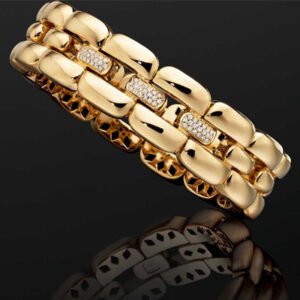
Bracelets provide a practical way to add jewellery without making the face or neckline the primary focus. Current choices include chain bracelets, metal cuffs, leather bracelets, bead designs and contemporary kada-inspired forms.
For Indian wardrobes, a kada-inspired bracelet can bridge traditional and modern styling. Simple metal designs can complement kurtas and festive clothing, while cleaner contemporary versions can work with shirts, polos and casual outfits.
When buying a bracelet, measure your wrist and compare the internal circumference or stated sizing rather than relying on a generic small, medium or large label. Also check the clasp or closure mechanism because a secure closure is essential for frequently worn jewellery.
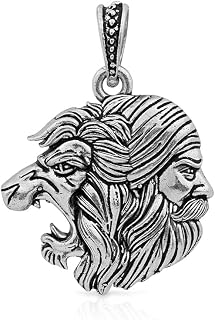
Pendants allow a relatively simple chain to become more personal. Popular choices include initials, religious or cultural symbols, geometric shapes, dog tags, coordinates, abstract forms and minimalist bars.
Choose the chain and pendant as a combined system. A very delicate chain may look unbalanced with a large pendant, while an oversized chain can overpower a small minimalist pendant. The pendant's attachment point should also be strong enough for regular use.
For men who wear earrings, small hoops, studs and minimalist geometric pieces can provide a clean contemporary look. The most important considerations include material, diameter, closure style, comfort and compatibility with any individual metal sensitivities.
Buyers should be particularly careful with vague material descriptions. “Silver colour,” “gold tone” and “metal finish” describe appearance rather than necessarily identifying the underlying material.
Metal colour has a major influence on overall styling. Gold-toned jewellery tends to create a warmer, more traditional or luxurious visual effect, while silver-toned jewellery generally feels cooler and more understated. Black jewellery can create a stronger contemporary or streetwear-oriented appearance.
Wedding and festive dressing gives men more freedom to use noticeable accessories. However, jewellery should complement the clothing rather than compete with embroidery, buttons, footwear and other details.
Professional environments usually reward restraint. A slim chain under an open collar, a simple ring or a discreet bracelet can add personality without becoming the centre of attention.
When choosing jewellery for work, consider the dress code, whether the pieces make noise while typing or moving, and whether the finish looks appropriate alongside your watch and other accessories. Highly reflective or oversized jewellery may be less versatile for conservative workplaces.
Casual styling allows more experimentation with proportions and layering. Chunky chains, stacked rings, leather bracelets, black-finished metals and layered necklaces can all work with relaxed clothing.
The key is visual hierarchy. If the necklace is substantial, avoid automatically adding multiple large rings and bracelets. One dominant accessory supported by simpler pieces often looks more intentional than several competing statement items.
Layering works best when there is variation without chaos. Instead of wearing several nearly identical chains, combine different lengths, link structures or thicknesses.
People who experience irritation from jewellery should pay close attention to the actual material and alloy information. A product marketed by its colour alone does not provide enough information to assess material compatibility.
Potentially irritating factors can include certain metal alloys, plating wear, trapped moisture, sweat, soaps and friction. If a piece causes persistent irritation, discontinue use and consider professional medical advice rather than repeatedly changing cleaning products or coatings.
Durability depends on construction as much as material. A strong-looking chain can still have a weak clasp or connector, while a delicate piece may be perfectly suitable when used appropriately.
Not all jewellery should be treated as waterproof. Sweat, shower water, swimming-pool chemicals, seawater, soap and skincare products can affect different materials and finishes in different ways.
If the manufacturer or retailer does not explicitly describe a piece as suitable for water exposure, a cautious approach is to remove it before showering, swimming or exercising. This is particularly relevant to plated finishes, leather and pieces containing adhesives or decorative components.
Cleaning should follow the material and finish rather than using one method for every piece.
Proper storage reduces scratches, tangling and unnecessary exposure to moisture. Chains should ideally be separated or arranged so that links do not become tightly tangled with other jewellery.
Online photographs can make jewellery difficult to judge because lighting, camera angles and model proportions influence how large or reflective a piece appears. A systematic comparison is therefore more reliable.
Determine whether the piece is solid precious metal, plated, stainless steel, leather, alloy or another material. Avoid making assumptions based on colour.
Look for chain length, bracelet circumference, ring dimensions, pendant size, chain thickness and other measurements relevant to the design.
Weight can help distinguish visually similar products, although it should not be treated as a direct indicator of quality. Construction, material and design all matter.
Customer reviews can help identify recurring issues such as sizing problems, clasp failures, finish changes or differences between product photographs and the delivered item. Give more weight to repeated patterns than to isolated praise or criticism.
Before purchasing, check the applicable retailer's current return, replacement and warranty conditions. Jewellery can have category-specific exclusions, hygiene restrictions or size-related conditions, so never assume that every product has identical terms.
Rather than buying many pieces at once, a compact collection can cover most everyday situations.
This approach can provide more outfit combinations while reducing unnecessary purchases.
Brand selection should be based on the specific product rather than brand recognition alone. Depending on the category and budget, Indian shoppers may encounter names such as Titan, Fastrack, Mia by Tanishq, Tanishq, CaratLane, Giva, Voylla, BlueStone, Shaya by CaratLane, Huggies and other established jewellery or fashion-accessory brands.
For premium or precious-metal jewellery, compare purity, hallmark information where applicable, weight, making charges or other applicable costs, certification or documentation, and current retailer terms. For fashion jewellery, focus more heavily on base material, plating or coating, dimensions, clasp construction, care requirements and customer feedback.
Instead of defining the best jewellery solely by price, divide your budget according to intended use.
Choose clean lines, narrow chains, plain rings and simple bracelets. Avoid excessive surface decoration if your wardrobe relies on neutral colours and uncomplicated silhouettes.
Traditional metal colours, simple chains, signet rings and understated bracelets can complement shirts, tailored trousers and classic footwear.
Chunkier chains, layered necklaces, black finishes and larger rings can work particularly well with relaxed silhouettes, denim, oversized tops and jackets.
Kada-inspired bracelets, gold-toned chains, culturally meaningful pendants and traditional motifs can complement kurtas, sherwanis and festive outfits.
Medium-width chains, restrained bracelets and one well-chosen ring provide enough detail without making the outfit appear overly formal.
Proportion is one of the most overlooked elements of men’s jewellery. The ideal size depends on body frame, clothing volume and the presence of other accessories.
A thin chain can disappear visually when worn with a bulky jacket, while a very thick chain can dominate a lightweight shirt. Similarly, a wide ring may appear more prominent on a smaller finger than it does in a product photograph.
Think of jewellery as part of the complete outfit. The objective is not necessarily to choose the largest or most noticeable piece, but to create an intentional relationship between accessories and clothing.
A reliable product listing should answer practical questions before you purchase. Look for:
The term “hypoallergenic” can be useful but should not automatically be interpreted as a guarantee that every person will tolerate a product. Material disclosure is more informative because sensitivity can vary between individuals and alloys.
If skin compatibility is a major concern, investigate the actual metal composition and avoid relying exclusively on marketing language. If irritation occurs, stop wearing the jewellery and seek appropriate professional advice if symptoms persist.
Personalised jewellery can be a strong choice when the purpose is emotional significance rather than purely trend-driven fashion. Initials, names, dates and meaningful symbols can make a simple chain, bracelet or pendant more distinctive.
However, personalisation can affect resale value, return eligibility and suitability for gifting. Check spelling, engraving details, dimensions and the retailer's policy for customised products before placing an order.
Jewellery can be difficult to gift because sizing and style preferences are highly personal. If you do not know the recipient's preferred metal colour or ring size, a less size-sensitive item such as an adjustable bracelet or appropriately sized pendant may be easier to choose.
The choice depends on the purpose of the purchase. Fashion jewellery is often appropriate when the main objective is experimenting with current styles, colours and shapes without committing to a higher-cost precious-metal piece.
Precious jewellery becomes more relevant when material value, long-term ownership, traditional significance or gifting importance is a priority. In that situation, the buyer should investigate purity, weight, documentation and purchase terms in much greater detail.
Trends are useful for discovering new styles, but timeless designs generally provide greater long-term versatility. A practical strategy is to keep everyday jewellery relatively classic and use one or two trend-led pieces for experimentation.
For example, a plain ring or classic chain can remain part of a wardrobe for years, while a distinctive oversized chain or unusual pendant can be added when a particular fashion direction appeals to you. This reduces the risk of building an entire jewellery collection around a short-lived trend.
There is no universal best trend. Minimalist chains, signet rings, textured bracelets, kada-inspired designs, layered necklaces and statement pieces can all be appropriate depending on personal style, occasion and budget. For maximum versatility, understated designs are generally easier to combine with different outfits.
The best metal depends on the intended use. Stainless steel can be practical for contemporary everyday fashion jewellery, sterling silver offers a genuine precious-metal option, and gold is particularly relevant for buyers who prioritise precious-metal ownership and traditional Indian jewellery.
Stainless steel can be a practical everyday choice because many designs are relatively low maintenance and have a contemporary appearance. Buyers should still verify the specific material description, construction, dimensions and care instructions for the product being considered.
Both can work well. Gold creates a warmer and often more traditional appearance, while silver provides a cooler and more understated look. Consider your clothing, watch, skin preferences and existing accessories rather than following a universal rule.
There is no fixed number. A useful styling principle is to establish one focal piece and keep supporting accessories simpler. A chain, ring and bracelet can work together when their proportions and finishes are coordinated.
Chunkier chains remain a relevant styling option, particularly in casual and streetwear looks. Their suitability depends on proportion, outfit structure and personal preference. A medium-weight chain can be a more versatile alternative if you want a similar look with broader everyday usability.
A chain or appropriately sized bracelet may be easier than a ring because sizing is less restrictive. A simple pendant can also work well if you know the recipient's preferred metal colour and general fashion style.
Do not rely solely on a silver-coloured appearance. Check the stated material, purity information and applicable documentation or hallmark information from the seller. For valuable purchases, use established verification practices rather than assuming a product is genuine based on photographs.
Yes, provided the specific jewellery is suitable for regular use and is maintained appropriately. Everyday pieces should be selected for comfort, secure closures, durable construction and compatibility with the wearer's routine.
Gold-plated jewellery can be worthwhile when the buyer wants the appearance of gold at a lower cost and accepts that the surface finish may eventually wear. It should be evaluated as fashion jewellery rather than treated as equivalent to solid gold.
Store silver in a dry environment away from unnecessary humidity and separate it from pieces that could scratch the surface. A suitable jewellery box or soft storage pouch can help reduce exposure and surface damage.
Check the material, purity where applicable, dimensions, weight, sizing, finish, clasp construction, care instructions, customer feedback and the current retailer's return and warranty terms. For precious jewellery, pay particular attention to authenticity and applicable hallmark or documentation requirements.
The strongest jewellery purchase is not necessarily the most expensive, largest or trendiest option. It is the piece whose material, construction, dimensions, comfort and design match the way you actually intend to use it.
For everyday wear, prioritise comfort, durable construction and easy maintenance. For weddings and festivals, consider how the jewellery interacts with traditional clothing and other accessories. For fashion experimentation, trend-led chains, rings and darker finishes can add variety without requiring a complete wardrobe change. For precious-metal purchases, place greater emphasis on purity, weight, authenticity, documentation and current purchase terms.
Before choosing from any current product list, compare the specifications carefully, read verified customer feedback, check the latest retailer information and confirm the final price and applicable policies at the time of purchase. Jewellery trends can change quickly, but a well-selected piece with suitable proportions and reliable construction can remain useful long after a particular trend has passed.
Which direction suits your 2026 jewellery collection better: minimalist everyday pieces, or bold wedding and statement styles?